How do I keep a reptile husbandry log?
Short answer
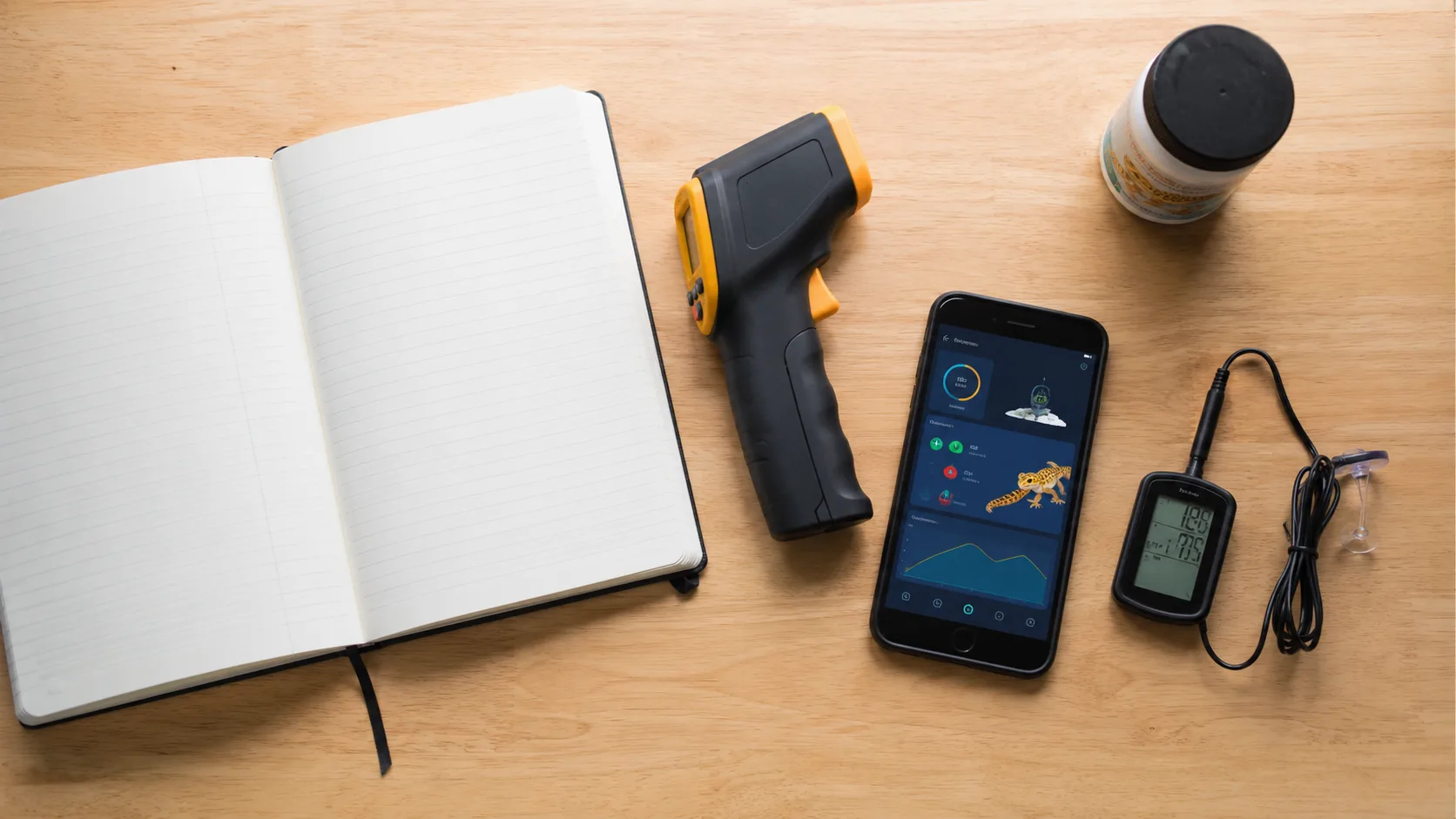
A useful husbandry log tracks the data a reptile vet wants on a sick visit: warm-side and cool-side temperatures, humidity, UVB install date, feeding (what, when, accepted or refused), weight, shedding dates, defecation, and any unusual behaviour. Capture daily for new keepers, weekly minimum once routine is set. Spreadsheet, paper journal, or a dedicated reptile app all work.
- Author
- Reptimo Editorial
- Updated
- Updated
- Reading time
- 5 min read
Why the log matters most
Reptiles are husbandry-driven animals. The vast majority of problems you'll encounter — refused meals, slow growth, lethargy, eventually respiratory infection or metabolic bone disease — trace to a slow drift in temperature, humidity, UVB output or feeding cadence over weeks or months. By the time it's visible in the animal's behaviour, the drift has been happening for a while.
A husbandry log makes those drifts visible early:
- A warm-side surface that gradually drops 2 °C as the bulb ages, caught on a logged trend chart before the snake stops eating.
- A weight that slowly trends down across a winter fast — fine if stable, alarming if it accelerates.
- Shed cycles becoming more spaced out, a year-on-year stress signal worth investigating.
It also dramatically changes vet visits. A reptile vet seeing a written husbandry log can rule out husbandry causes in minutes, focus the diagnostic effort, and avoid unnecessary tests. Per the Merck Veterinary Manual, husbandry is the first thing reptile vets investigate on any sick visit — so the keeper who already brought that data saves time, money and animal stress.
What to track
A useful log captures:
Care parameters
Reptile husbandry log — what to track
| Parameter | Recommended value | Notes |
|---|---|---|
| Warm-side temperature | Daily / weekly | Verified with IR gun on the basking surface |
| Cool-side temperature | Daily / weekly | |
| Ambient air | Weekly | Especially if the room temperature shifts seasonally |
| Humidity | Daily / weekly | Especially for ball pythons, chameleons, sliders |
| Feeding | Every feeding | Date, prey item, accepted or refused |
| Weight | Weekly | Same time of day, same conditions |
| Defecation | Every event | Photo if unusual |
| Shed dates | Every shed | Start of blue eyes through full shed |
| UVB install date | Once per bulb | Replacement reminder 11 months later |
| Supplementation | Every dusting | Brand, type (Ca/Ca+D3/multivit) |
| Behaviour notes | As they happen | New behaviours, posture changes, anything unusual |
| Vet visits | Every visit | Date, diagnosis, treatment, prescription, follow-up |
For the species-specific parameter ranges (the "what does normal look like"), see the species pillar guides: bearded dragon, leopard gecko, ball python, corn snake, red-eared slider, veiled chameleon, crested gecko.
How often to log
Logging cadence depends on how new the situation is:
- First 1–2 months with a new reptile or after any major husbandry change — daily. This is when problems are most likely and you're building the baseline of what "normal" looks like for this animal.
- Settled, healthy adult, established routine — weekly is enough for parameters; every feeding, weighing, shed and defecation still goes in regardless of cadence.
- Anytime something looks off — back to daily until the situation resolves or you've seen a vet.
The goal is enough data to spot trends, not perfect coverage. A log that's 90 % filled in and useful beats a 100 %-perfect log that takes 20 minutes a day and you eventually abandon.
What format works best
Three formats cover the realistic range:
Paper notebook. Cheap, durable, no battery, no service that can go away. Downsides: hard to graph trends, hard to search ("when was the last shed?" requires flipping pages), no automatic reminders. Works well for keepers with one or two animals and a stable routine.
Spreadsheet (Google Sheets, Excel, Numbers). Free, flexible, graph-able, searchable, cloud-synced if you use Google Sheets. The main downside is friction — opening the sheet on a phone to log a feeding takes longer than tapping a button. Many keepers start here and migrate as their collection grows.
Dedicated reptile app. Lower friction (one-tap logging), built-in reminders (UVB replacement, feeding, weight checks), automatic trend graphs, species-specific parameter targets to compare against, exports for vet visits. The trade-off is lock-in: if the app disappears, your data goes with it unless the export is good. A detailed comparison sits in the best reptile tracking app guide.
How Reptimo fits: built specifically to remove the daily-logging friction with a fast feeding logger, automatic UVB-age countdown, weight-trend graphs against species norms, and shedding predictions. Reminders for the boring-but-essential maintenance (UVB tube replacement, vet checkups). Export to standard formats so your data is portable.
How a log saves a vet visit
A real-world pattern: a bearded dragon stops eating. With no log, the keeper guesses ("maybe she's brumating?"), waits a month, then takes her in. The vet, with no data, runs a full bloodwork panel plus calcium test (£100–200), takes a faecal sample, and asks 15 husbandry questions you can't fully answer.
With a log, the same situation: the keeper notices feedings stopped on day 4 of the new bulb's third month — and the basking surface has dropped from 41 °C to 35 °C. The vet sees the data, confirms the bulb has aged early, swaps the bulb, weight is stable, no bloodwork needed. £50 visit instead of £200. And the dragon recovers in a week instead of a month.
That's the actual ROI of a husbandry log. The Reptimo "is my reptile sick?" checklist works much better when you have logged data to compare against.
Getting started today
If you've never logged before, start simple:
- Pick a format — paper, spreadsheet or app.
- Set a daily reminder for the first month at the same time (mornings before basking lights turn on works well).
- Log only 5 things to start: warm-side temperature, humidity, feeding (yes/no), defecation (yes/no), one behaviour note.
- Add complexity as it becomes habit — weight weekly, shed dates, UVB install date.
- Bring the log to your next vet visit — print or export. The vet will probably thank you out loud.
The beginner reptile comparison assumes you'll be logging from day one — and the species pillar guides give the parameter ranges to compare your logged data against.
Frequently asked questions
What's the point of a reptile husbandry log?
What should a reptile husbandry log include?
How often should I log my reptile?
Is a spreadsheet good enough for a reptile log?
What should I bring to a reptile vet appointment?
How do I track weight on a reptile?
Should I track every defecation and shed?
What does a husbandry app give you over a spreadsheet?
How long do I need to keep a husbandry log?
Sources
- Reptile Care for Beginners · PetMD
- Disorders and Diseases of Reptiles · Merck Veterinary Manual
- Bearded Dragon Husbandry Tracking Tips · ReptiFiles
Quick check
Test what you just learned
A short quiz, just for you. Pick an answer to get instant feedback — there's no pass mark, this is for your benefit.
Quiz questions and answers
What's the single most useful thing to bring to a reptile vet visit?
Correct answer: A written husbandry log of the last 1–3 months — temperatures, humidity, feeding, weight, sheds, UVB age
A husbandry log shortcuts diagnosis from weeks to days. A vet can spot a pattern in your logged data that you couldn't from memory — a slow temperature drift, a weight trend, a shedding cycle change. It also saves unnecessary tests by ruling out husbandry causes immediately.
What's the right logging frequency for a new reptile?
Correct answer: Daily for the first 1–2 months, then weekly minimum
New reptiles and new setups are highest-risk periods. Daily for 1–2 months builds the baseline you need to spot drifts. Once routine is set, weekly is enough — but log every feeding and every weighing always.
Which of these is NOT worth tracking?
Correct answer: Your reptile's astrological sign
Joke answer aside — defecation and shed dates are both genuinely valuable. Defecation changes signal digestion issues; shed cycles flag stress or seasonal patterns. Track both.