What is the best pet reptile for beginners?
Short answer
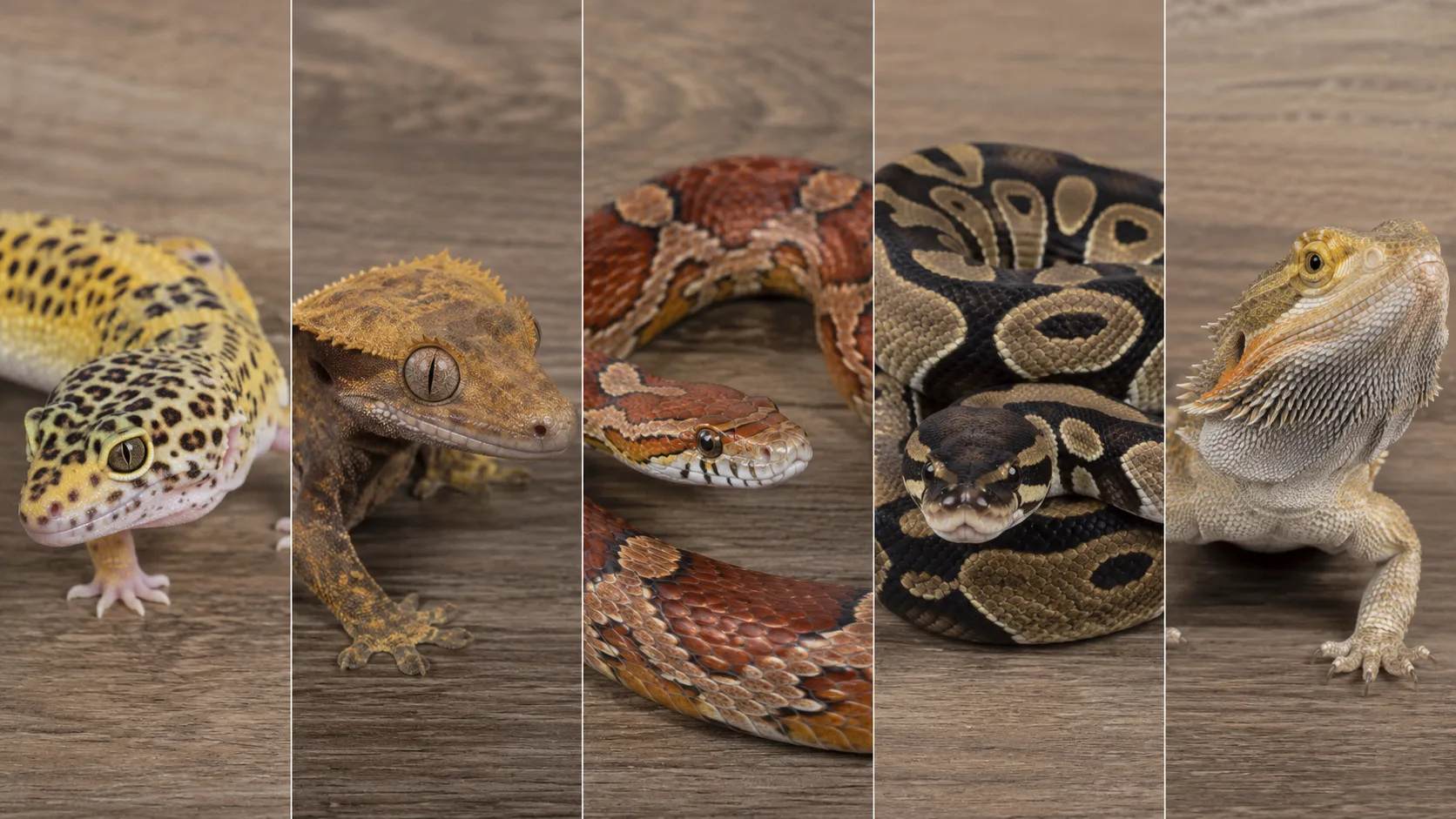
For most first-time keepers, the best beginner reptiles are leopard geckos, crested geckos, corn snakes, ball pythons and bearded dragons — in roughly that order of forgiveness. Avoid red-eared sliders (decades- long commitment, large tank), green iguanas (huge adults, complex care) and veiled chameleons (high mortality from husbandry mistakes) until you have one species of experience.
- Author
- Reptimo Editorial
- Updated
- Updated
- Reading time
- 5 min read
The honest answer first
There is no single "best" beginner reptile because beginners differ in space, budget, time, and what they want from the animal. But the short-list is short — five species cover roughly 90 % of well-matched first reptiles. Per PetMD's reptile-keeping intro and consistent recommendations from curated beginner-reptile lists:
- Leopard gecko — small enclosure, no UVB strictly required (low-level recommended), accepts handling, eats live insects.
- Crested gecko — eats a commercial powdered diet (no live food required), no UVB needed, room-temperature setup possible.
- Corn snake — most handleable beginner snake, eats F/T mice, docile.
- Ball python — calm but more sensitive to husbandry; longer lifespan than the others.
- Bearded dragon — most "visible" beginner reptile (active, observable) but needs more space, stronger UVB, more food prep.
What unites this list: each has thoroughly-documented modern care sheets, predictable husbandry, a 15+ year average lifespan and an established captive-bred supply. None require wild-caught animals or arcane technique.
The top 5 beginner reptiles
A quick comparison across the five:
Care parameters
Beginner reptile comparison
| Parameter | Recommended value | Notes |
|---|---|---|
| Leopard gecko | Small (60×30 cm OK) | Live insects, 15–20 yr, accepts brief handling |
| Crested gecko | Vertical 45×45×60 cm | Powdered diet (no insects required), 15–20 yr, jumps not cuddles |
| Corn snake | 120×60×60 cm adult | F/T mice, 15–20 yr, the most handleable beginner snake |
| Ball python | 120×60×60 cm adult | F/T rodents, 20–30 yr, calmer but more humidity-sensitive |
| Bearded dragon | 120×60×60 cm adult | Insects + greens, 8–12 yr, strong UVB required, most observable |
Detailed care guides for each: leopard gecko, corn snake, and bearded dragon. (Crested gecko and ball python pillar guides land in upcoming batches — placeholder for now.)
Commitment: time, money, space
The setup cost is the surprise. A quality beginner setup runs:
- Leopard gecko / crested gecko: £200–400 / $250–500 (enclosure, heat, low-level UVB, hides, substrate, dishes, thermometer + IR gun). The animal £30–80 captive-bred.
- Corn snake: £300–500. The animal £50–150 depending on morph.
- Ball python: £300–600. The animal £80–500+ depending on morph.
- Bearded dragon: £500–800. Higher because of the larger enclosure, T5 HO UVB, halogen flood, larger water bowl. The animal £40–150 captive-bred.
Then ongoing costs: £15–30/month for feeders or CGD, a UVB tube replacement (£25–60) every 12 months, occasional vet visits (£60–150/visit, annual wellness check recommended), occasional décor/substrate replacement.
Time: 15–30 minutes daily (feeding, observation, quick checks) plus weekly enclosure spot-cleaning (15–30 minutes) plus monthly deep cleans (1 hour). Annual vet visit and bulb replacement.
Space: even the smallest setup (leopard gecko) needs at least 60×30 cm of permanent counter space. Bearded dragons and adult corn snakes need 4-foot enclosures — about the size of a small dresser.
For tracking the routine across a 15–20 year lifespan, see the best reptile tracking app guide.
How to choose between the five
Pick by what matters most to you:
- You want a reptile you can interact with → bearded dragon or corn snake. Both tolerate (some enjoy) 10–20 minute handling sessions multiple times a week.
- You're allergic to insect smell or squeamish about feeding live prey → crested gecko. The commercial powdered diet (Repashy, Pangea, Black Panther Zoological) covers nutrition without live insects.
- You have limited counter space → leopard gecko or crested gecko. Both work in 60×30 or 45×45×60 cm enclosures.
- You want a snake but worry about commitment → corn snake. The most beginner-friendly snake by every metric.
- You want a "wow" display animal → bearded dragon or a future blue-tongue skink (upcoming guide). Both are highly visible and active during the day.
Whichever you choose, build the enclosure properly before the animal arrives — quarantining a sick reptile in a half-finished enclosure because "we'll upgrade next month" is the most common first-year welfare mistake.
Species to avoid as first reptiles
These come up in pet stores but are wrong for first-time keepers:
- Red-eared slider turtle — 75+ gallon adult water volume, dry basking platform with strong UVB, 20–40 year lifespan, and listed among the world's worst invasive species (IUCN top 100) if released. See the slider care guide for the full picture before committing.
- Green iguana — sold tiny, reaches 1.5–2 m adult, needs custom enclosure, complex herbivore diet, can deliver serious bites and tail whips. High surrender rate.
- Veiled chameleon — welfare-sensitive (hidden distress), high mortality from minor husbandry mistakes (dehydration is the #1 killer), should not be the first reptile someone tries.
- Monitor lizards (savannah, Argus) — sold small, reach 90 cm+ adult, powerful animals needing large enclosures and active husbandry.
- Large constrictors (Burmese, reticulated, African rock python) — reach 3–5 m adults; safety hazard outside of expert handlers.
- Wild-caught reptiles of any species — parasite load, capture stress, ethical concerns. Always source captive-bred from a reputable breeder.
If you've already taken one of these on and are looking for help, see "is my reptile sick?" and the species pillar guide where available.
Frequently asked questions
What is the easiest reptile to keep?
Are reptiles low-maintenance pets?
What's the lifespan commitment for common pet reptiles?
How much does a beginner reptile cost to set up?
Do reptiles like being held?
What's the best beginner reptile for a child?
Are bearded dragons good for beginners?
What reptiles should beginners avoid?
Can I keep two reptiles together?
Sources
- Reptile Care for Beginners · PetMD
- Best Beginner Reptiles · TrustedHousesitters
- Bearded Dragon Care Sheet · PetMD
- Leopard Gecko Care Sheet · PetMD
Quick check
Test what you just learned
A short quiz, just for you. Pick an answer to get instant feedback — there's no pass mark, this is for your benefit.
Quiz questions and answers
Which is the most beginner-friendly first reptile for most people?
Correct answer: Leopard gecko (small enclosure, forgiving, ~15-year lifespan)
Leopard geckos are the standard recommendation for first-time keepers: small enclosure, forgiving husbandry range, accept handling, easy to source quality care information. Green iguanas and Burmese pythons are advanced-keeper animals with high surrender rates.
How long is the commitment for a typical pet leopard gecko or corn snake?
Correct answer: 15–20 years
Leopard geckos and corn snakes routinely live 15–20 years in captivity. Ball pythons reach 20–30. Sliders 20–40+. Reptiles are multi-decade pets; match the species to where you'll be in 20 years.
What's the best reason to avoid a red-eared slider as a first pet?
Correct answer: They need 75+ gallons of filtered water for an adult and live 20–40 years — and are listed as invasive if released
Sliders need 280+ litres of filtered swimming water for an adult, a dry basking platform with strong UVB, and 20–40 years of commitment. They're also among the world's worst invasive species when released — wrong pet for someone who isn't sure of a multi-decade commitment.