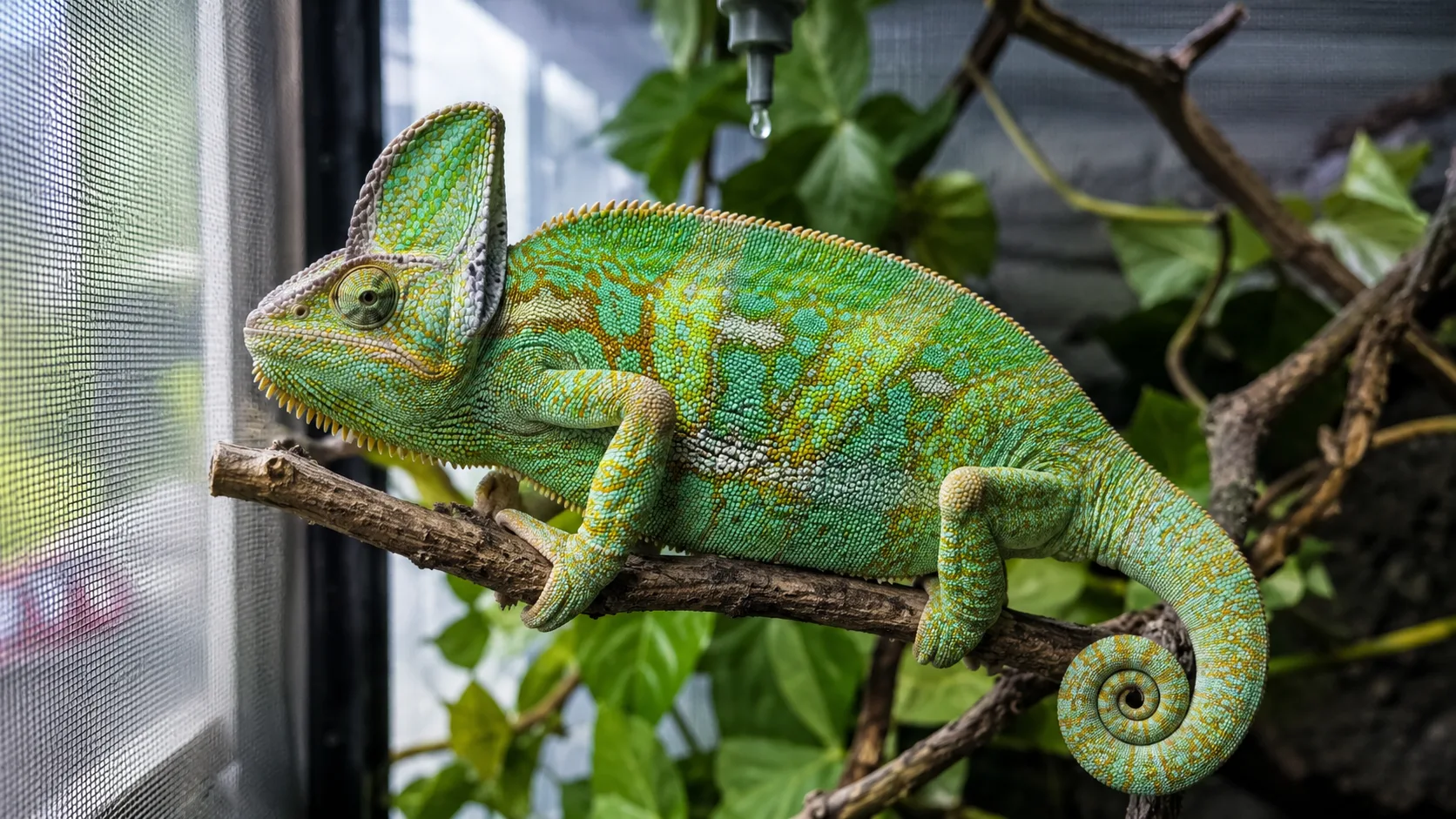
How do you care for a veiled chameleon?
Short answer
Veiled chameleons need a screen enclosure of at least 60 × 60 × 120 cm (24 × 24 × 48 in) tall, basking surface of 32–35 °C (90–95 °F), ambient air of 24–27 °C (75–80 °F), strong UVB (UVI 3–4 at basking), daily heavy misting plus a dripper for water, varied gut-loaded insects with calcium dusting, and no handling beyond essential health checks.
- Author
- Reptimo Editorial
- Updated
- Updated
- Reading time
- 6 min read
What you're signing up for
Veiled chameleons (Chamaeleo calyptratus) are arboreal old-world lizards native to Yemen and south-west Saudi Arabia, where they live in mountainous wadis with surprising temperature swings and reliable seasonal humidity. In captivity they are display animals — visually stunning, behaviorally fascinating, and emphatically not beginner pets. The single most documented captive mortality cause is dehydration (per Chameleon Academy's hydration explainer), because the species hides distress until physiological decline is advanced.
If you're choosing your first reptile, see the beginner reptile comparison first — chameleons are appropriate after you've kept one easier species successfully.
Care parameters
Veiled chameleon — care parameters at a glance
| Parameter | Recommended value | Notes |
|---|---|---|
| Adult enclosure | 60 × 60 × 120 cm / 24 × 24 × 48 in screen | Larger preferred; glass is wrong |
| Basking surface | 32–35 °C / 90–95 °F | Females 29–32 °C; hatchlings 29–32 °C |
| Ambient air | 24–27 °C / 75–80 °F | |
| Night-time | 18–22 °C / 65–72 °F | Real night drop required |
| Humidity | 50–70 % via misting | Should dry between mistings; never standing wet |
| UVB | UVI 3–4 at basking | T5 HO, mounted on top of screen, replace every 12 months |
| Diet (adult) | 5–8 insects every other day | |
| Hydration | Daily heavy misting + dripper 1+ h | No water bowls |
| Lifespan | ♂ 5–8 yr, ♀ 4–6 yr |
Enclosure
Veiled chameleons need a tall screen enclosure — minimum 60 × 60 × 120 cm (24 × 24 × 48 in) for adults, with 90 × 60 × 180 cm preferred. Screen on all sides provides essential ventilation. A glass tank traps stagnant air, holds humidity unevenly, and is the most common contributing factor to respiratory infection in this species.
Inside the enclosure, build a vertical climbing network:
- Live or silk plants densely arranged for cover and visual barriers. Ficus benjamina, schefflera, pothos and umbrella plant are common safe choices.
- Branches and vines at multiple heights — the chameleon should always be able to climb to within 25–30 cm of the basking bulb at the top and retreat to densely-planted areas at the bottom.
- Drainage tray at the base — daily misting produces a lot of water; a sloped tray with drainage catches runoff and prevents standing water.
The Hopp'in Help veiled chameleon care sheet covers enclosure setup in detail.
Heating and lighting
A halogen flood bulb on a dimming thermostat creates the basking zone, mounted above the screen top so the chameleon can climb to within 25–30 cm of it on the basking branch:
- Basking surface at 32–35 °C (90–95 °F) for males, 29–32 °C for females and gravid females.
- Ambient air 24–27 °C (75–80 °F).
- Night drop to 18–22 °C (65–72 °F) is healthy — turn all heat and light off at night. Chameleons need a real diurnal cycle.
UVB: a T5 HO linear tube delivering UVI 3–4 at the basking surface. Arcadia Dragon 12 % or Zoo Med ReptiSun 10.0 mounted on top of the screen with no glass barrier. Replace every 12 months. Detail in the cross-species UVB guide.
Hydration
This is the section that decides whether a veiled chameleon lives 5 years or 5 months. Per Chameleon Academy, dehydration is the documented #1 captive cause of death. Chameleons drink droplets from leaves — they do not use water bowls. Two systems running together:
- Heavy misting 2–4 times per day, 1–2 minutes each, with a pressure sprayer or programmable mister (MistKing, Mistking Starter, or equivalent). Mist plants and walls heavily; the chameleon drinks the droplets that form on leaves over 5–15 minutes after misting stops.
- Dripper running at least 1 hour per day onto a leafy branch the chameleon can access. The slow, persistent drip is how many chameleons primarily drink in captivity.
The full hydration setup is in the hydration spoke. Recognition of early dehydration is in the dehydration signs guide.
Diet
Veiled chameleons are insectivores that also browse on plant matter (unlike most chameleon species). Provide:
- Staple insects: crickets and dubia roaches, gut-loaded for 24+ hours with leafy greens, squash, carrot, and a dry gut-load.
- Variety: hornworms (high water content — good for borderline hydration), silkworms (calcium-rich), BSFL (calciworms).
- Avoid as staples: mealworms (too fatty / hard chitin), superworms (same), wax worms (treat only).
- Plant matter: safe leafy greens (collard greens, mustard greens, dandelion) accepted by many adults — never iceberg lettuce or anything fatty.
Schedule by life stage:
Care parameters
Veiled chameleon feeding schedule
| Parameter | Recommended value | Notes |
|---|---|---|
| Hatchling (0–3 months) | 8–12 small insects DAILY | |
| Juvenile (3–9 months) | 6–10 insects every other day | |
| Adult (9 months+) | 5–8 appropriately sized insects every other day | |
| Calcium (no D3) | Dust at EVERY feeding | |
| Calcium with D3 | Once per week | |
| Multivitamin | Every 2 weeks |
Handling
The boring but important answer: don't. Beyond essential health checks, transferring for cleaning, and vet visits, veiled chameleons should not be handled. They hide stress visually — subtle dark coloration, slowed feeding, posture changes — but the stress hormones drive immune suppression and shortened lifespans. The modern keeper consensus, captured in PetMD's care sheet: treat as a display species.
If you want a relationship, train daily hand-feeding — offer an insect from forceps or by hand through the open enclosure door, on the chameleon's terms. The chameleon learns to associate you with food without being grabbed. This is a sustainable bond; trying to pet a chameleon like a bearded dragon isn't.
Common problems
The cross-species warning signs checklist covers universal red flags. Chameleon-specific patterns:
- Sunken or closed eyes, dark sustained color, orange urates, lethargy → dehydration, the #1 cause of captive death. Vet appointment within 1–3 days; review misting + dripper. See dehydration signs.
- Tremors, weak grip, swollen jaw or limbs, kinked spine → metabolic bone disease, usually expired or inadequate UVB. Vet appointment urgent.
- Gaping mouth, mucus, wheezing → respiratory infection, often driven by inadequate ventilation (glass enclosure) or chronic cold. Vet appointment within days.
- Female with bulging belly straining or lethargic → dystocia/egg-binding. Vet emergency. Even unmated females produce infertile eggs and need a deep laying substrate to dig in.
- Gravid retention pattern in females → female-specific reproductive risk; vet review by 12 months.
YMYL note: chameleon care is welfare-sensitive and includes serious medical conditions (MBD, dystocia, respiratory infection) that need a reptile-experienced vet, not forum advice. Find a chameleon-experienced vet before you bring one home.
Frequently asked questions
How long do veiled chameleons live?
Are veiled chameleons good for beginners?
What size enclosure does an adult veiled chameleon need?
What temperature does a veiled chameleon need?
What UVB does a veiled chameleon need?
How do you give a chameleon water?
What do veiled chameleons eat?
Should you handle a veiled chameleon?
Why is my chameleon turning dark?
Sources
- Veiled Chameleon Care Sheet · Hopp'in Help
- Hydration for Chameleons · Chameleon Academy
- Veiled Chameleon Care Sheet · PetMD
- Disorders and Diseases of Reptiles · Merck Veterinary Manual
Quick check
Test what you just learned
A short quiz, just for you. Pick an answer to get instant feedback — there's no pass mark, this is for your benefit.
Quiz questions and answers
What's the right enclosure type for a veiled chameleon?
Correct answer: Tall screen enclosure at least 60 × 60 × 120 cm
Veiled chameleons need a tall screen enclosure — minimum 60 × 60 × 120 cm (24 × 24 × 48 in). Screen provides essential ventilation; sealed glass traps stagnant air and drives respiratory infections.
How do you provide water to a veiled chameleon?
Correct answer: Heavy daily misting (2–4×/day) plus a dripper running 1+ hour daily
Chameleons drink droplets from leaves, not from bowls. Misting plus a dripper is the standard hydration setup. Dehydration is the #1 captive cause of death for this species — water delivery is the single most important husbandry skill.
Should you handle a veiled chameleon for bonding?
Correct answer: No — handling is significant stress; treat as a display animal beyond essential health checks
Veiled chameleons hide stress visually but suffer real immune suppression from handling. Treat as a display species; some keepers train daily hand-feeding for positive association without the stress of being grabbed.
What's the #1 captive cause of death in veiled chameleons?
Correct answer: Dehydration
Dehydration is the documented #1 captive cause of death. Sunken eyes, dark colour, lethargy and orange-tinted urates are early warning signs — see the dedicated dehydration signs guide.