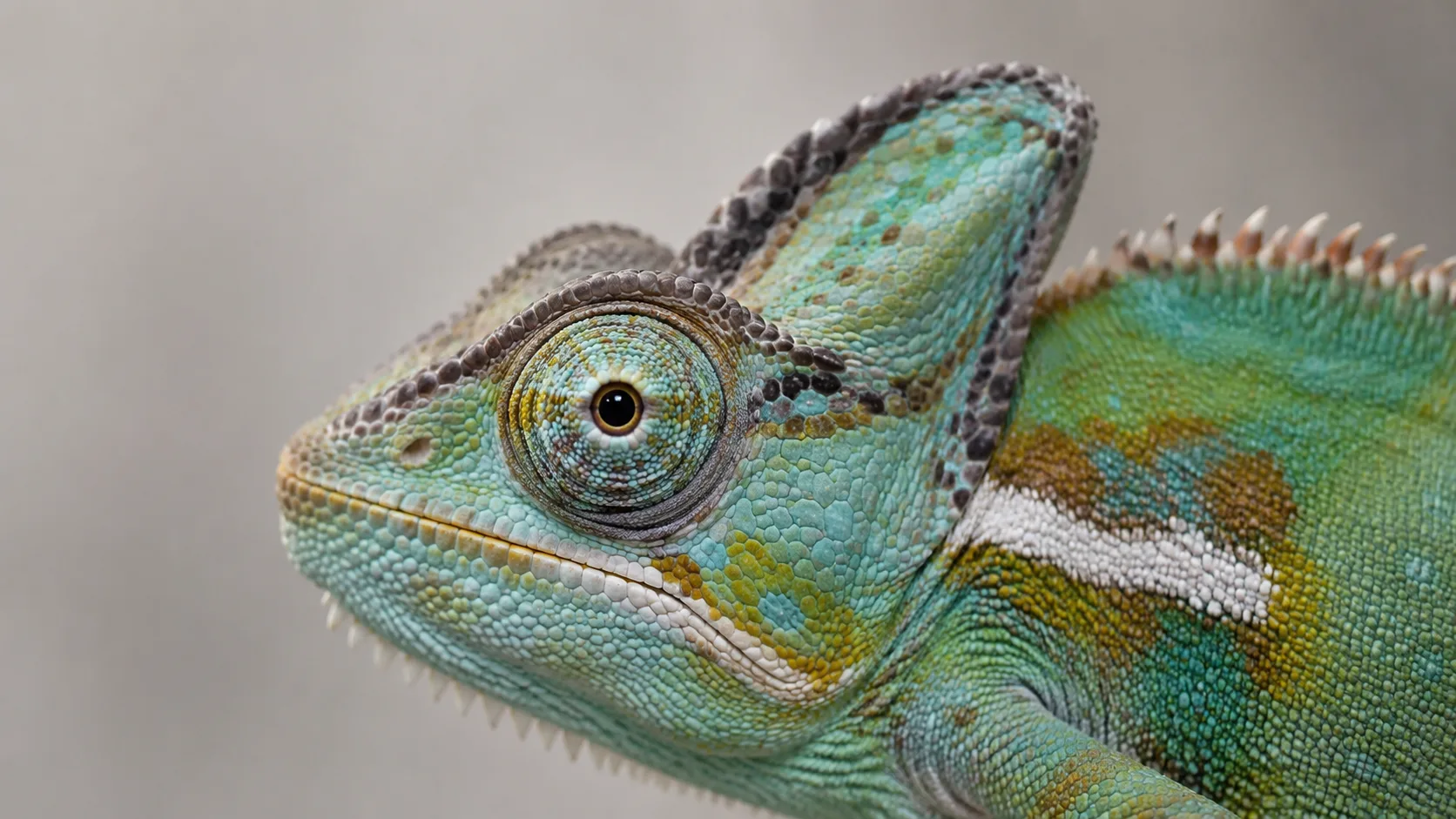
What are the signs of dehydration in a chameleon?
Short answer
Sunken or closed eyes during the day, orange or yellow urates (the white part of the dropping), sustained dark or muted coloration, lethargy, loose skin that doesn't snap back when gently pinched, and refusing food are early signs of dehydration in a chameleon. Dehydration is the documented #1 captive cause of death — book a reptile vet within 1–3 days if you see two or more of these together.
- Author
- Reptimo Editorial
- Updated
- Updated
- Reading time
- 5 min read
YMYL note: this is veterinary territory
Dehydration in chameleons is a serious medical condition and the documented #1 captive cause of death in this species per Chameleon Academy. This article covers recognition and the husbandry corrections that prevent recurrence — it is not a substitute for a reptile- experienced vet, and nothing here is treatment advice. If your chameleon shows any of the signs below, book a reptile vet within 1–3 days; same-day for sunken eyes plus lethargy, closed eyes, or neurological signs.
The signs
Per the Merck Veterinary Manual and consistent guidance across modern chameleon care resources, dehydration in chameleons presents in a recognisable progression. Catch it early — the species hides distress until physiological decline is well advanced.
Earliest signs (catch them here):
- Yellow or yellow-orange urates — the white tip of the dropping is the easiest at-home hydration check. Healthy urates are bright white. Yellow signals mild dehydration; orange signals moderate.
- Brief or sustained dark coloration during the day, beyond the normal post-lights-on warming phase.
- Reduced or refused feeding.
- Skin loses elasticity — gently pinched skin takes a second to snap back instead of returning instantly.
Moderate signs (urgent now):
- Sunken eyes — eyes appear pulled into the head, the surrounding tissue looks hollow. Chameleon eyes are normally full and rounded in their turret sockets. Sunkenness means fluid loss has reached the orbital area.
- Sustained orange / pasty urates.
- Lethargy — slow movement, reluctance to climb, hanging in low parts of the enclosure.
- Closed eyes during the day in a well-heated enclosure.
Severe signs (emergency):
- Both eyes closed and crusted with discharge.
- Loss of grip on branches.
- Neurological signs — tremors, head-tilt, twitching.
- Unresponsive to touch or stimulus.
What causes dehydration
Per Chameleon Academy and the Hopp'in Help care sheet:
- Inadequate misting — once a day, skipped, or too brief. The most common cause in pet collections.
- No dripper — chameleons drink mostly from the slow steady drip onto leaves; without one, hydration depends entirely on catching post-mist droplets.
- Sealed glass enclosure trapping stagnant air without effective hydration delivery. Screen enclosures are the standard.
- Low ambient humidity sustained under 50 %.
- Basking temperature too high — accelerates water loss.
- Underlying illness — kidney disease, parasites, infection — presents as dehydration that doesn't resolve with husbandry correction.
- Female reproductive load — gravid females and even unmated females producing infertile eggs lose water rapidly and need extra hydration support.
What to do RIGHT NOW
If you spot any of the early signs:
- Audit hydration immediately. Is the mister working? Did the dripper run today? Is humidity in range (60–80 % briefly between mistings)?
- Increase misting to 4 times per day for 2 minutes each.
- Run the dripper for 2+ hours, refilling as needed.
- Check the urate at every defecation — track color improvement over 24–48 hours.
- Don't handle the chameleon unless required for the vet.
If you see moderate signs (sunken eyes, sustained orange urates, lethargy):
- Book a reptile-experienced vet within 1–3 days. Subcutaneous or intracoelomic fluids resolve dehydration that home misting cannot.
- Optional adjunct: shower therapy — place the chameleon on a leafy plant in a lukewarm, very-low-pressure shower for 15–20 minutes. Many chameleons drink heavily under this stimulus. Temperature must be gentle (~22–25 °C / 72–77 °F at the chameleon); never high-pressure water.
- Bring a written husbandry log to the appointment — temperatures, humidity, last mist times, dripper duration, last shed, last feeding, supplement schedule.
If you see severe signs (closed eyes, unresponsive, neurological):
- Same-day reptile vet — find the nearest exotics vet and call ahead. Transport in a small ventilated container with a damp paper towel.
When to see a vet — non-negotiable
Dehydration is a YMYL situation with real mortality risk. Several common keeper interventions make things worse or cost time:
- Don't force water into the mouth — aspiration risk.
- Don't rely on "oral rehydration drops" or aquarium products not meant for reptiles.
- Don't wait a week to see if it clears. Sunken eyes mean the chameleon is already substantially behind on fluid balance and organ function may be affected.
A reptile vet will: examine the chameleon, assess hydration clinically, give subcutaneous or intracoelomic fluids (lactated Ringer's or similar), check for underlying causes (kidney, parasites, infection), and review your husbandry. Severe cases may need hospitalisation.
Hydration setup prevention
The husbandry that prevents recurrence — and that should be in place before any chameleon enters the enclosure:
Care parameters
Chameleon hydration — the standard setup
| Parameter | Recommended value | Notes |
|---|---|---|
| Misting schedule | 2–4×/day, 1–2 min each | Programmable mister (MistKing) removes daily-burden risk |
| Dripper | 1+ hour/day | Onto leafy branches the chameleon can access |
| Humidity target | 60–80 % briefly, dries between | Never constantly saturated |
| Enclosure | Screen, 60×60×120 cm+ | Never sealed glass |
| Drainage | Sloped tray at base | Catches misting runoff, prevents standing water |
| Live plants | Pothos, ficus, schefflera | Buffer humidity, provide leaves for drinking droplets |
| Shower therapy (preventive) | Once a month, 15 min lukewarm | Optional bonus hydration |
Full hydration setup detail is in the hydration spoke; the broader husbandry baseline is in the pillar care guide; and other early-warning patterns across species sit in "is my reptile sick?".
Frequently asked questions
What's the EARLIEST sign of dehydration in a chameleon?
Why are sunken eyes a serious sign in a chameleon?
Do chameleons drink from water bowls?
How do you test a chameleon's hydration at home?
Can I rehydrate a dehydrated chameleon at home?
What causes dehydration in captive chameleons?
How much should I mist a chameleon per day?
Is shower therapy good for a dehydrated chameleon?
When should I take a chameleon to the vet for dehydration?
Sources
- Hydration for Chameleons · Chameleon Academy
- Veiled Chameleon Care Sheet · Hopp'in Help
- Disorders and Diseases of Reptiles · Merck Veterinary Manual
Quick check
Test what you just learned
A short quiz, just for you. Pick an answer to get instant feedback — there's no pass mark, this is for your benefit.
Quiz questions and answers
What does urate color tell you about chameleon hydration?
Correct answer: White = healthy, yellow = mild dehydration, orange = moderate-to-significant dehydration
Urate color (the white tip of a chameleon dropping) is the easiest at-home hydration check. Healthy urates are bright white. Yellow = mild concern, orange = moderate-to-significant dehydration warranting a vet appointment.
Sunken eyes in your chameleon means…?
Correct answer: Moderate-to-severe dehydration — vet within 1–3 days
Chameleon eyes are full and rounded when hydrated. Sunken eyes mean fluid loss has reached the orbital area — moderate-to-severe dehydration and a reptile-vet appointment within 1–3 days is the right response.
How do you provide water to a chameleon?
Correct answer: Heavy daily misting (2–4×/day) plus a dripper running 1+ hour
Chameleons drink droplets from leaves, not from bowls. Heavy misting plus a dripper is the standard hydration setup. The most common dehydration cause is a busy keeper missing a daily misting cycle.
Can you fix moderate dehydration (sunken eyes, orange urates) at home?
Correct answer: No — needs subcutaneous fluids at a reptile vet; home rehydration is an adjunct only
Moderate-to-severe dehydration in chameleons needs a vet for subcutaneous or intracoelomic fluids. Home techniques (more misting, dripper, shower therapy) can buy time and help mild cases but won't fix moderate ones. Don't delay the vet appointment.