How do I help my reptile with a stuck shed?
Short answer
Stuck shed in any reptile is almost always a humidity problem. Raise humidity to species-appropriate levels (lizards 50–70 %, snakes 70–80 % during shed), provide a damp humid hide for solitary shedders, and run a warm water soak at 28–30 °C / 82–86 °F for 15–20 minutes. Never pull at dry shed — it tears living tissue. Retained shed on toes, around the eyes, or on the tail tip past 48–72 hours is a vet visit.
- Author
- Reptimo Editorial
- Updated
- Updated
- Reading time
- 6 min read
What stuck shed looks like across species
Healthy reptile shed comes off in 1–3 days during the active phase of the shed cycle. Stuck shed — clinically called dysecdysis — is what's left behind: thin, whitish, papery patches clinging to toes, around eyes, on the tail tip, or in folds between body segments days after the rest of the shed has gone.
The PetMD dysecdysis reference identifies humidity below species range as the dominant cause across all reptile groups, with secondary contributors including dehydration, parasites, chronic poor husbandry, low-grade illness, and a lack of abrasive surfaces (rough bark, rocks) that reptiles naturally use to help shed.
Patterns by species:
Care parameters
Stuck shed — typical patterns by species
| Parameter | Recommended value | Notes |
|---|---|---|
| Snakes (ball python, corn snake) | Patchy or in pieces | Should come off in one piece if humidity is right |
| Leopard gecko | Toes, eyes, tail tip | Highest-risk species for toe-loss |
| Crested gecko | Toes, tail base, around vent | Eats most of the shed; what's left is concerning |
| Bearded dragon | Patches over weeks | Long staged shed is normal; persistent patches over 2 weeks not |
| Chameleon | Around eyes, casque, limbs | Eye involvement is a near-emergency |
The safe soak-and-dab protocol
The two-step protocol that works across species:
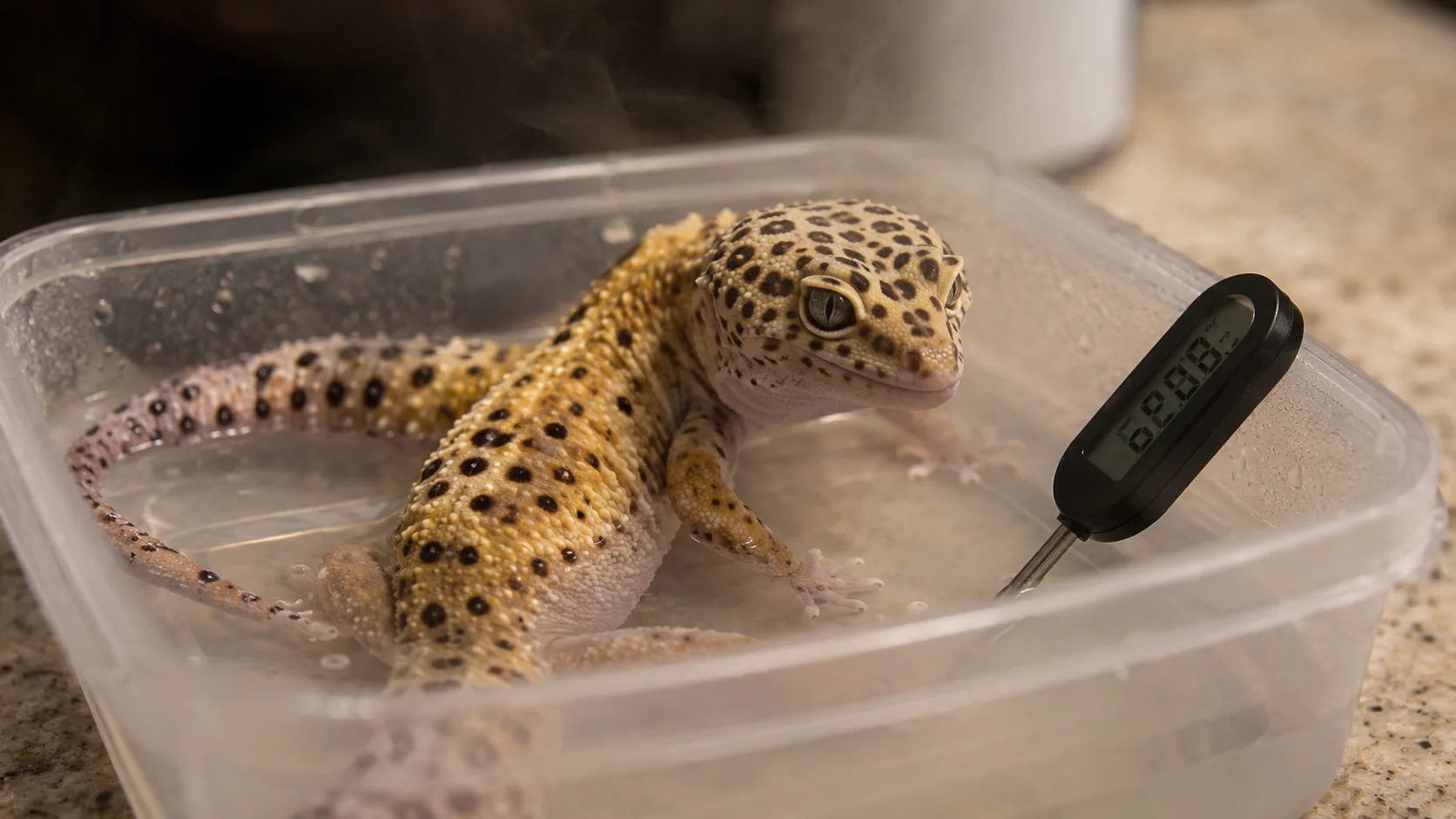
Step 1 — soak. Use a small lidded plastic container with a few air holes. Add warm water at 28–30 °C / 82–86 °F to a depth appropriate to the species:
- Geckos and small lizards: 5–10 mm (just covers toes and belly).
- Snakes: 1–3 cm (enough to wet body but not cover head).
- Larger lizards: enough to cover limbs but not above shoulders.
- Turtles: tank-water level is already correct; offer a longer basking-and-warmth window instead.
Place the reptile in for 15–20 minutes. Stay in the room and check temperature with a probe; water cools fast and a cold soak does nothing. Never fill above the head.
Step 2 — dab, never pull. Lift the reptile onto a soft, damp cloth. Using a damp cotton bud, gently roll any patches of softened shed off in the direction of growth. If a piece doesn't release with light pressure, leave it — it's not ready. Repeat the soak 24 hours later.
High-risk zones
Three areas where stuck shed moves from minor husbandry issue to vet visit:
- Eyes — retained membrane around the eyelid can prevent
blinking, hunting and feeding within 24 hours. Especially
high-risk in leopard geckos and chameleons. Treat with humid hide
- careful warm soak (water level kept well below the head); if not clear in 48 hours or eye looks swollen, see a vet.
- Toes — retained ring of shed acts as a tourniquet. Over 1–3 days the toe darkens, blood flow stops, the tip dries and falls off. Highest risk in leopard geckos and crested geckos. Same soak protocol; black toes or no return of pinkness = immediate vet.
- Tail tip — similar to toes. Slim arboreal species and small geckos especially. Soak and watch; necrosis = vet.
For the species-specific protocol in leopard geckos (the highest-risk single species), see leopard gecko stuck shed.
Prevention is humidity
A rescue soak gets the current shed off; only humidity prevents the next one. Targets:
Care parameters
Shed-cycle humidity targets by species group
| Parameter | Recommended value | Notes |
|---|---|---|
| Tropical (ball python, crested gecko, chameleons) | 70–80 % during shed, 55–65 % outside | |
| Temperate (corn snake, leopard gecko) | 30–50 % ambient + 70–80 % humid hide | |
| Desert (bearded dragon, uromastyx) | 30–40 % usually; spike to 50 % during shed via damp moss |
For species that benefit from a humid hide (leopard gecko, ball python, crested gecko, corn snake during shed), use a small closed container with damp sphagnum moss placed on the warm-to-cool boundary. Replace the moss weekly — it gets soiled fast — and re-wet whenever it feels dry on the surface.
The Reptiles Magazine dysecdysis guide notes that a single failed shed often resolves with one rescue cycle and a humidity fix; repeated failed sheds usually indicate chronic husbandry drift or systemic illness.
What not to use
A few "shed aid" products and home remedies that aren't useful:
- Vaseline / oils / "shed creams." Clog scales, trap dirt, unnecessary. Plain warm water works as well.
- Aggressive towel rubbing. Tears living skin under shed that isn't ready to come off.
- Tweezers on retained patches. Only the shed that lifts under a damp cotton bud is safe to remove.
- Daily soaks for weeks. Repeated stress; fix humidity instead.
- Higher heat to "speed shedding." Doesn't help; can cause thermal stress.
When stuck shed becomes a vet visit
The Merck Veterinary Manual covers retained shed under skin disorders; the thresholds that move it to a vet:
- Retained shed on toes or around the eyes after 48–72 hours of correct treatment.
- Any toe that's darkening, feeling cool or appearing dead.
- Eyes that look swollen, cloudy or discharging.
- Open sores or bleeding under removed shed.
- Repeated failed shed cycles despite a working humid hide and correct humidity — suggests underlying illness, chronic dehydration, or parasite burden.
- Whole-body retained shed in a snake (one good shed should come off in one piece).
For the broader warning-signs framework that stuck shed fits into, see "is my reptile sick?".
The week after a stuck shed
Once the rescue cycle has cleared the current shed:
- Verify ambient humidity with a digital hygrometer — not a stick-on dial.
- Check the humid hide for those species that need one — moss visibly damp, hide on warm-to-cool boundary.
- Re-check basking and warm temperatures with an IR gun. Chronically cool reptiles shed badly.
- Note the shed date in the husbandry log.
- Plan to weigh weekly through the next cycle to confirm recovery.
The combination "rescue + restore humidity + log it" prevents the problem from being something you firefight every cycle. For the broader tracking discussion, see the husbandry-log primer.
Frequently asked questions
Why does my reptile have stuck shed?
Is it safe to peel shed off a reptile?
How do I do a reptile soak?
What humidity does a reptile need for healthy shedding?
Where is stuck shed most dangerous?
How long does a normal reptile shed take?
Should I feed my reptile during a shed?
When does stuck shed become a vet visit?
Can stuck shed actually harm my reptile?
Sources
- Dysecdysis in Reptiles · PetMD
- Diagnosing and Treating Dysecdysis · Reptiles Magazine
- Disorders and Diseases of Reptiles · Merck Veterinary Manual
Quick check
Test what you just learned
A short quiz, just for you. Pick an answer to get instant feedback — there's no pass mark, this is for your benefit.
Quiz questions and answers
What's the safest first step to remove stuck shed from any reptile?
Correct answer: Soften first with a warm water soak (28–30 °C / 82–86 °F) for 15–20 minutes, then dab off softened shed with a damp cotton bud
Always soften first. A 15–20 minute warm soak followed by gentle dabbing with a damp cotton bud lifts only the shed that's ready to release. Pulling at dry retained skin tears living tissue underneath, leaving scars and open wounds. Shed-aid sprays are unnecessary; plain warm water works as well.
Where is stuck shed most dangerous on a reptile?
Correct answer: Around the eyes, on the toes of lizards/geckos, and on the tail tip — these zones can cause vision loss or tissue death within days
Three high-risk zones: eyes (can blind, prevent feeding within 24 hours), toes (acts as a tourniquet, toe loss in 1–3 days), tail tip (necrosis). Stuck shed in these areas that doesn't clear in 48–72 hours of correct treatment is a vet visit, not a cosmetic concern.
What's the upstream fix for a reptile that keeps getting stuck shed?
Correct answer: Restore the species-appropriate humidity range and provide a humid hide where applicable — the next shed cycle should clear without intervention
Stuck shed is a symptom of chronic humidity drift in most cases. A working humid hide and correct ambient humidity means the next shed cycle clears on its own. Baths rescue the current shed; humidity prevents the next one. Oils clog scales and are not used in modern care.