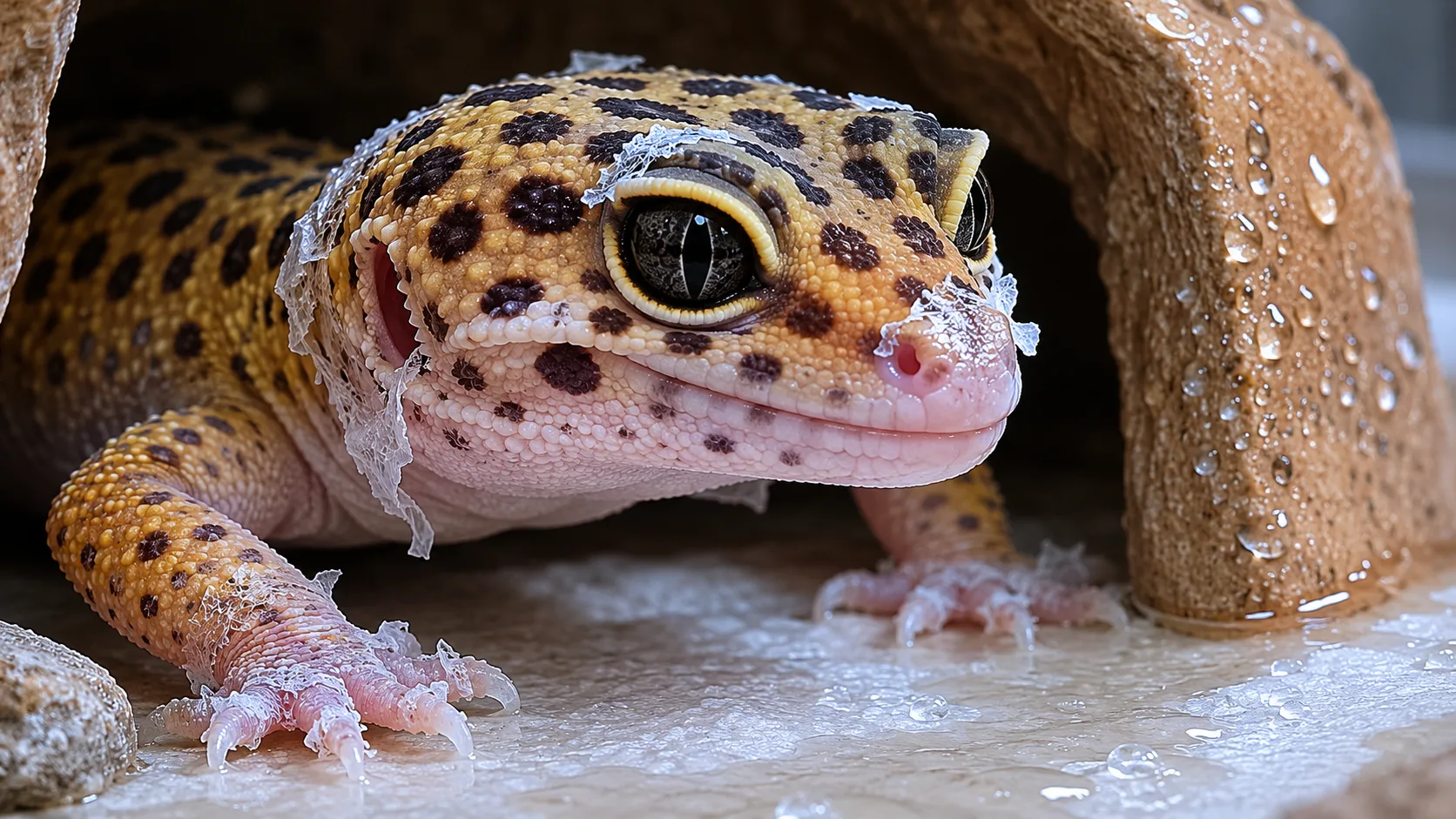
Why is my leopard gecko not shedding properly?
Short answer
Stuck shed in leopard geckos is almost always a humidity problem. Provide a humid hide with damp sphagnum moss at 70–80 % humidity, then bath the gecko in 28–30 °C (82–86 °F) water 5–10 mm deep for 15–20 minutes to soften the retained skin. Never pull at dry shed — it tears living tissue and can strangle toes within days.
- Author
- Reptimo Editorial
- Updated
- Updated
- Reading time
- 5 min read
What stuck shed looks like
A healthy leopard gecko shed comes off in 24–48 hours, usually in large intact pieces that the gecko eats as it removes them. Stuck shed — also called dysecdysis — is what's left behind: thin, whitish, papery patches clinging to the toes, around the eyes, along the tail or in the armpits days after the rest of the shed has gone.
The high-risk zones, in order, are toes (most common, can constrict blood flow), eyes (can blind the gecko), tail tip, and the small folds around the limbs. Whole-body stuck shed almost always means humidity is wrong; localised toe shed almost always means the humid hide isn't being used.
Care parameters
Leopard gecko shed setup — target values
| Parameter | Recommended value | Notes |
|---|---|---|
| Ambient humidity | 30–40 % | Daily, across the whole tank |
| Humid hide humidity | 70–80 % | Damp sphagnum moss, replaced weekly |
| Warm side | 28–30 °C / 82–86 °F | Surface, on the floor of the warm hide |
| Soak water temp | 28–30 °C / 82–86 °F | 5–10 mm deep — just covers the toes |
| Soak duration | 15–20 minutes | Stop sooner if the gecko panics |
How to safely fix stuck shed
The two-step protocol below is the standard advice on ReptiFiles' shedding guide and the PetMD leopard gecko care sheet:
Step 1 — soak. Use a small lidded plastic container with a few air holes. Add warm water (28–30 °C / 82–86 °F) 5–10 mm deep — just enough to cover the toes. Place the gecko in and leave for 15–20 minutes. Stay in the room and check temperature with a probe; water cools fast and a cold soak does nothing.
Step 2 — dab, never pull. Lift the gecko onto a soft, damp cloth. Using a damp cotton bud, gently roll any patches of softened shed off in the direction of growth (head to tail). If a piece doesn't release with light pressure, leave it — it's not ready. Repeat the soak in 24 hours.
Humidity — the real fix
A single rescue soak gets the current shed off; only humidity prevents the next one. Leopard geckos in the wild shelter in burrows where the microclimate sits at 70–80 % humidity even when the surface is bone dry. Replicate that with a humid hide: a closed plastic container (or purpose-built hide) about the size of a deck of cards, filled with damp sphagnum moss, with an entry hole cut in the side.
Place it on the cool-to-warm boundary so the gecko has access to both temperature and moisture in one spot. Replace the moss weekly — it gets soiled fast — and re-wet it whenever it feels dry on the surface. The rest of the tank should sit at 30–40 % ambient humidity; misting the whole enclosure is the wrong approach and risks scale rot.
If the humid hide isn't being used, move it closer to the warm side or make the entrance smaller (geckos prefer tight, secure spaces). For ambient humidity context across the gecko's broader setup, see our leopard gecko temperature guide.
Stuck shed around the eyes
Eye shed is the highest-risk zone and the one most likely to need a vet. A thin retained membrane around the eyelid can prevent the gecko from blinking, hunting and feeding within 24 hours.
Protocol: run the humid hide for 24 hours, then run a warm soak with the water level kept well below the head — the goal is humid air around the gecko, not water in the eye. After the soak, very carefully dab the eyelid area with a damp cotton bud — single light strokes, no rubbing. If the shed doesn't clear in 48 hours, the eye looks swollen or cloudy, or the gecko stops eating, book a reptile vet promptly. Reptiles Magazine's dysecdysis guide covers more invasive treatments a vet may perform under sedation.
Stuck shed on toes — and why it matters
A ring of retained shed around a toe acts like a tourniquet. Over 1–3 days the toe darkens, blood flow stops, and the tip dries out and falls off. This is preventable with the soak protocol above, but the moment you see darkening or a toe that looks dead, that's an immediate vet visit — the gecko may need the dead tissue removed surgically to stop infection spreading.
Prevention checklist
Before treating stuck shed, fix what made the gecko stuck-shed in the first place. Run through this list weekly:
- Humid hide present, placed near the warm side, moss visibly damp.
- Ambient humidity reading at 30–40 % on a digital hygrometer.
- Warm-side surface 28–30 °C (82–86 °F) — chronically cool geckos shed badly.
- Fresh water in the bowl daily, large enough for the gecko to sit in.
- No chronic underweight — see our guide to leopard gecko appetite loss if the gecko is also losing weight.
A simple weekly log of shed dates, problems and weight makes patterns obvious across a year — repeated stuck shed in the same season usually points at a humidity drop you missed.
When to see a vet
Most stuck shed is fixable at home with one or two soak cycles. These signs move it to a vet:
- Retained shed on toes or eyes after 48–72 hours of correct treatment.
- A toe turning dark or feeling cool/dead.
- Eyes swollen, cloudy, or leaking discharge.
- Repeated failed sheds over multiple cycles despite a working humid hide (suggests underlying illness or chronic dehydration).
- Open sores or bleeding under removed shed.
For the broader vet-visit threshold for any reptile, see our ball python feeding-refusal guide — the diagnostic logic for "fix husbandry first, escalate on specific symptoms" carries straight across species.
Frequently asked questions
How do I get stuck shed off my leopard gecko's toes?
How long does a normal leopard gecko shed take?
Why won't my leopard gecko shed at all?
Is it safe to peel shed off my leopard gecko?
My leopard gecko has stuck shed around its eye. What do I do?
What humidity does a leopard gecko need to shed properly?
Should I feed my leopard gecko during a shed?
Why does my leopard gecko have shed around its toes?
Can stuck shed kill a leopard gecko?
Sources
- Leopard Gecko Care Sheet · PetMD
- Leopard Gecko Shedding · ReptiFiles
- Diagnosing and Treating Dysecdysis · Reptiles Magazine
- Dysecdysis in Reptiles · PetMD
Quick check
Test what you just learned
A short quiz, just for you. Pick an answer to get instant feedback — there's no pass mark, this is for your benefit.
Quiz questions and answers
What's the safest first step to remove stuck shed from a leopard gecko's toes?
Correct answer: Place the gecko in a shallow warm-water bath (28–30 °C / 82–86 °F) for 15–20 minutes, then dab off softened skin with a damp cotton bud
Always soften first. A 15–20 minute warm soak followed by gentle dabbing with a damp cotton bud lifts only the skin that's ready to release. Pulling at dry shed tears living tissue underneath.
What's the correct humidity setup for a leopard gecko?
Correct answer: Ambient 30–40 % with a humid hide at 70–80 %
Leopard geckos come from semi-arid regions where they shelter in burrows. The right setup is dry ambient humidity (30–40 %) plus a small humid hide of damp sphagnum moss at 70–80 % — exactly the microclimate they pick in the wild.
When does stuck shed become a vet visit?
Correct answer: If retained shed on toes or eyes doesn't clear within 48–72 hours of correct soaking, or any toe turns black
Most stuck shed clears with a single humid-hide and warm-soak cycle. If retained shed on toes or eyes persists past 48–72 hours, or a toe darkens (loss of blood flow), book a reptile vet — toes can be lost within days.