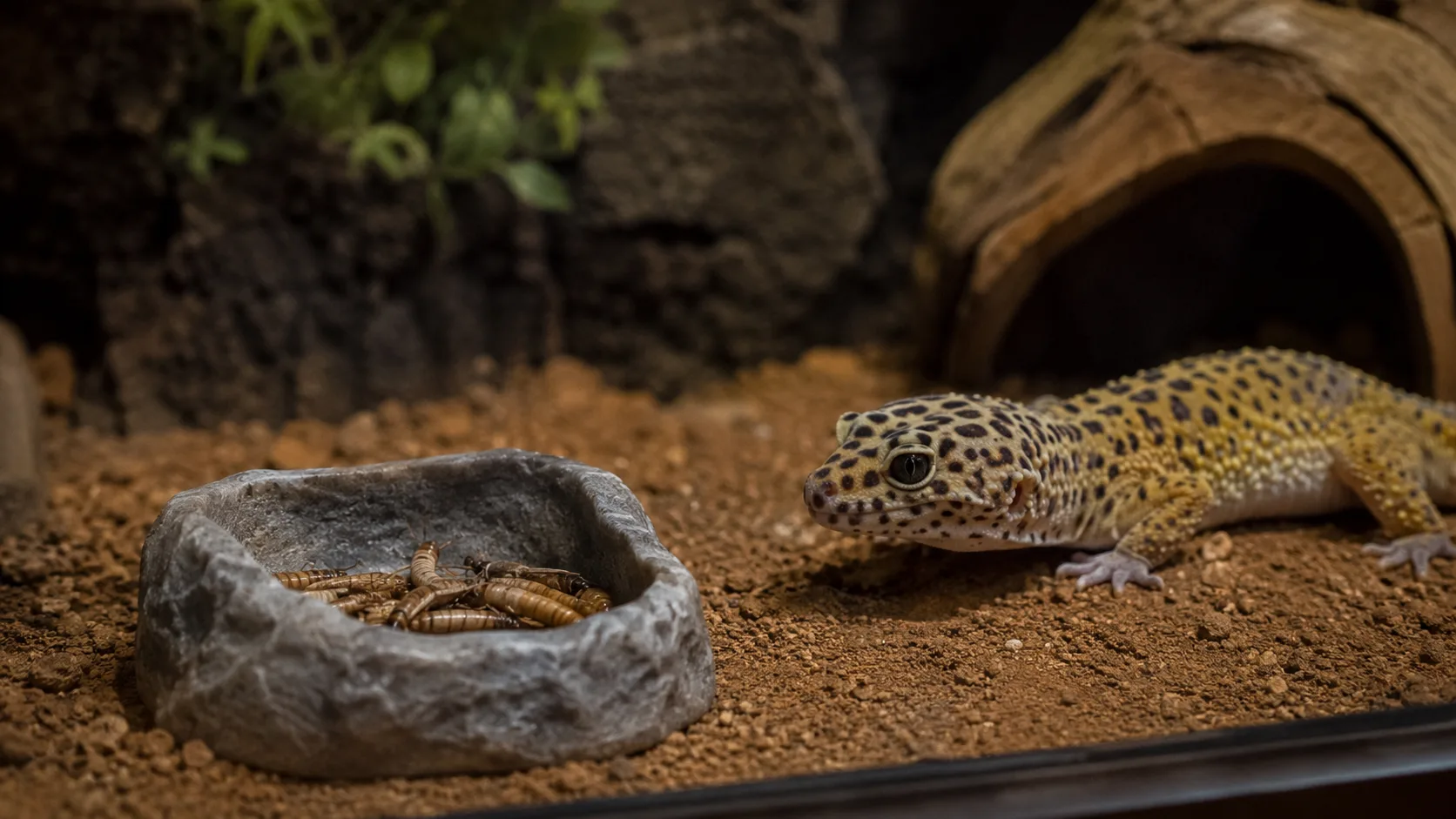
Why is my leopard gecko not eating?
Short answer
Most leopard geckos refuse food because of one of five fixable causes: warm-side temperature below 28 °C (82 °F), recent rehoming, an upcoming shed, monotonous feeders the gecko is bored of, or seasonal winter slowdown. Re-check warm-side temperature first, leave the gecko alone for a week, then try a different insect. A thinning tail or weight loss above 10 % means a reptile vet visit.
- Author
- Reptimo Editorial
- Updated
- Updated
- Reading time
- 6 min read
The 30-second triage
A leopard gecko that suddenly stops eating is one of the most common questions new keepers ask, and the cause is almost always one of five fixable husbandry or behavioural issues — not illness. The exception is a gecko with a noticeably thin tail base, weight loss above 10 % of body weight, or specific clinical signs (covered at the end); those are straight to a vet.
Run through this triage first:
Care parameters
Leopard gecko husbandry — quick check
| Parameter | Recommended value | Notes |
|---|---|---|
| Warm-side surface | 28–30 °C / 82–86 °F | Floor of the warm hide, digital probe |
| Cool side | 22–24 °C / 72–75 °F | |
| Ambient humidity | 30–40 % | Humid hide at 70–80 % |
| Hides | 3 — warm, cool, humid | Snug fit, dark inside |
| Photoperiod | 12 h on / 12 h off | |
| Last handling | ≥7 days ago | If new home: ≥14 days zero handling |
Cause 1 — Warm side too cool
A leopard gecko's stomach enzymes work efficiently above about 25 °C (77 °F); below that, digestion slows so much that food sits in the gut undigested and the gecko stops feeding because it can't process meals. The PetMD leopard gecko care sheet and most modern keeper-facing guides agree on 28–30 °C (82–86 °F) on the warm hide floor as the target.
Common heating mistakes:
- Stick-on dial thermometer on the glass — reads air, not the surface that matters. Use a digital probe on the floor of the warm hide.
- Heat mat without a thermostat — either too cool (under-mat losses) or burn-hot (no regulation). Always on a thermostat with the probe taped to the warm-side surface.
- Heat mat under thick substrate — much of the heat is absorbed before it reaches the floor surface.
Fix warm-side temperature first, give it 5–7 days to stabilise, then re-offer food. The full temperature setup with night handling is in our leopard gecko temperature guide.
Cause 2 — Recent rehoming or stress
A leopard gecko in a new enclosure or a new home almost always refuses food for the first 1–2 weeks. Per Terrarium Quest's appetite-loss guide, even a same-house room change can suppress feeding for a week.
The reset protocol:
- No handling for 14 days in a new home.
- No food for the first 5–7 days — let the gecko settle.
- Lights on a consistent timer — pattern stabilises faster than randomness.
- Re-offer in the evening once the warm hide is fully warm and the enclosure is dim.
If the gecko is established but recently saw a new pet, a fish tank move, a substrate change or new décor, the same calming protocol works — give it a quiet week before assuming illness.
Cause 3 — A shed is coming
A leopard gecko in shed cycle loses appetite for 24–48 hours either side of the event. Visual signs: skin colour dulls, the gecko hides more, patches of pale skin appear around the limbs. Don't offer food during the active peel; resume once shedding completes.
If a gecko is in repeated near-permanent "pre-shed" mode and not actually shedding, ambient humidity may be too low and a humid hide is missing or unused. See our stuck shed guide for the humidity setup that prevents this.
Cause 4 — Bored of the same feeder
Leopard geckos genuinely develop feeder preferences and feeder fatigue. A gecko fed mealworms exclusively for months sometimes refuses them overnight; rotating in crickets or dubia roaches often restarts feeding immediately. The Reptiles Magazine guide to non-eating leos covers this as a common cause of mid-life appetite loss.
Practical fixes:
- Offer a different feeder species — if mealworms are refused, try crickets or dubia roaches.
- Vary feeder presentation — moving prey (loose crickets) vs. static prey (mealworms in a dish) triggers different responses.
- Don't over-feed any single feeder type long term; rotate weekly.
A gecko with a clear permanent preference for one feeder is fine — run with what works, gut-load and dust properly, and don't force the issue.
Cause 5 — Winter slowdown
From late autumn through early spring, many leopard geckos voluntarily slow down, hide more and refuse meals — even with stable temperatures and lighting. This isn't true brumation (which is rare in captive leopard geckos), but a milder seasonal slowdown that mirrors the wild winter cycle.
The rule of thumb: in a healthy adult with stable weight and correct husbandry, a 2–8 week winter fast is normal and doesn't need intervention. Weigh weekly, keep offering at the usual cadence, and most geckos resume feeding in February or March.
A weight log makes this pattern unmistakable across a year — repeated winter slowdowns become predictable.
Cause 6 — Substrate impaction
A gecko on loose substrate (especially calci-sand or fine reptile sand, especially as a juvenile) can ingest substrate with prey. Impaction — substrate blocking the gut — presents as: refused food, no defecation for days, a visibly swollen abdomen, lethargy. This is a vet visit, not a husbandry tweak.
The Merck Veterinary Manual identifies impaction as a common preventable cause of GI blockage in captive lizards. If a gecko hasn't defecated in over 10 days and has been on loose sand, escalate.
Cause 7 — Parasites
Internal parasites (cryptosporidium, pinworms, coccidia) cause chronic appetite loss, weight loss and the classic "thin tail." A faecal exam from a fresh stool sample (under 24 hours old) is the only reliable way to confirm. Cryptosporidiosis in particular is a serious diagnosis and influences how the case is managed — don't self-diagnose.
Cause 8 — Stick tail / advanced illness
A noticeably thin tail base, especially with weight loss and refusal, can indicate "stick tail disease" — a syndrome covered by the PetMD stick-tail guide. The underlying causes vary (cryptosporidiosis, advanced parasites, chronic malnutrition, organ disease) and need veterinary diagnosis.
By the time stick tail is visible, the underlying cause is usually weeks or months in. Don't try to feed your way out — get to a reptile vet with a stool sample.
When to see a vet
Most refusals are husbandry, not illness. These signs change the calculation:
- Tail base noticeably thinner than a month ago.
- Weight loss above 10 % of body weight.
- Sticky white mucus around the mouth.
- Runny, bloody or unusually smelly droppings.
- Sunken eyes, sticky-looking mouth lining (dehydration).
- Lethargy, wobbling, weak grip.
- Sustained refusal beyond 3 weeks in an adult / 7–10 days in a hatchling with husbandry verified correct.
Bring a husbandry log to the appointment — warm-side temperatures, humidity readings, weight history, last shed date, recent feedings — and a fresh stool sample if possible. An exotics vet diagnoses far faster from a clean record than from "she just stopped eating."
For the broader vet-visit threshold across species, see our ball python feeding-refusal guide — the husbandry-first triage carries straight across.
Frequently asked questions
How long can a leopard gecko go without eating?
What temperature should a leopard gecko's warm side be for it to feed?
Why is my leopard gecko's tail getting thin?
Is it normal for leopard geckos to stop eating in winter?
What if my leopard gecko refuses crickets but eats mealworms (or vice versa)?
Will my leopard gecko eat while shedding?
Should I force-feed a leopard gecko that won't eat?
Can a new gecko refuse food because of stress?
When should I take a leopard gecko to a vet for not eating?
Sources
- Leopard Gecko Care Sheet · PetMD
- Why Your Leopard Gecko Won't Eat · Terrarium Quest
- Leopard Gecko Not Eating · Reptiles Magazine
- Stick Tail Disease in Leopard Geckos · PetMD
- Disorders and Diseases of Reptiles · Merck Veterinary Manual
Quick check
Test what you just learned
A short quiz, just for you. Pick an answer to get instant feedback — there's no pass mark, this is for your benefit.
Quiz questions and answers
Your adult leopard gecko hasn't eaten for 10 days but weight is stable, husbandry is correct, and it's January. What's the right next step?
Correct answer: Treat as a normal winter slowdown — weigh weekly, keep offering at the usual cadence
Healthy adult leopard geckos commonly fast through winter with stable weight. Force-feeding is vet-only; an emergency visit isn't warranted. Weigh weekly, keep offering food every 2–3 days, and most geckos resume feeding in spring.
Which sign genuinely warrants a vet visit, not a husbandry tweak?
Correct answer: A noticeably thin tail base, with weight loss above 10 % of body weight
The tail is the leopard gecko's fat-store organ — sustained thinning of the tail base, especially with weight loss, can signal starvation, parasites, or 'stick tail disease.' That's a YMYL situation; book a reptile vet and bring a fresh stool sample for a faecal exam.
What's the right warm-side surface temperature for a leopard gecko to feed reliably?
Correct answer: 28–30 °C (82–86 °F)
Feeding response is tied to belly heat. The warm hide floor needs to sit at 28–30 °C (82–86 °F). Below 25 °C digestion slows so much the gecko stops eating because it can't process food. Verify with a digital probe, not a stick-on dial.