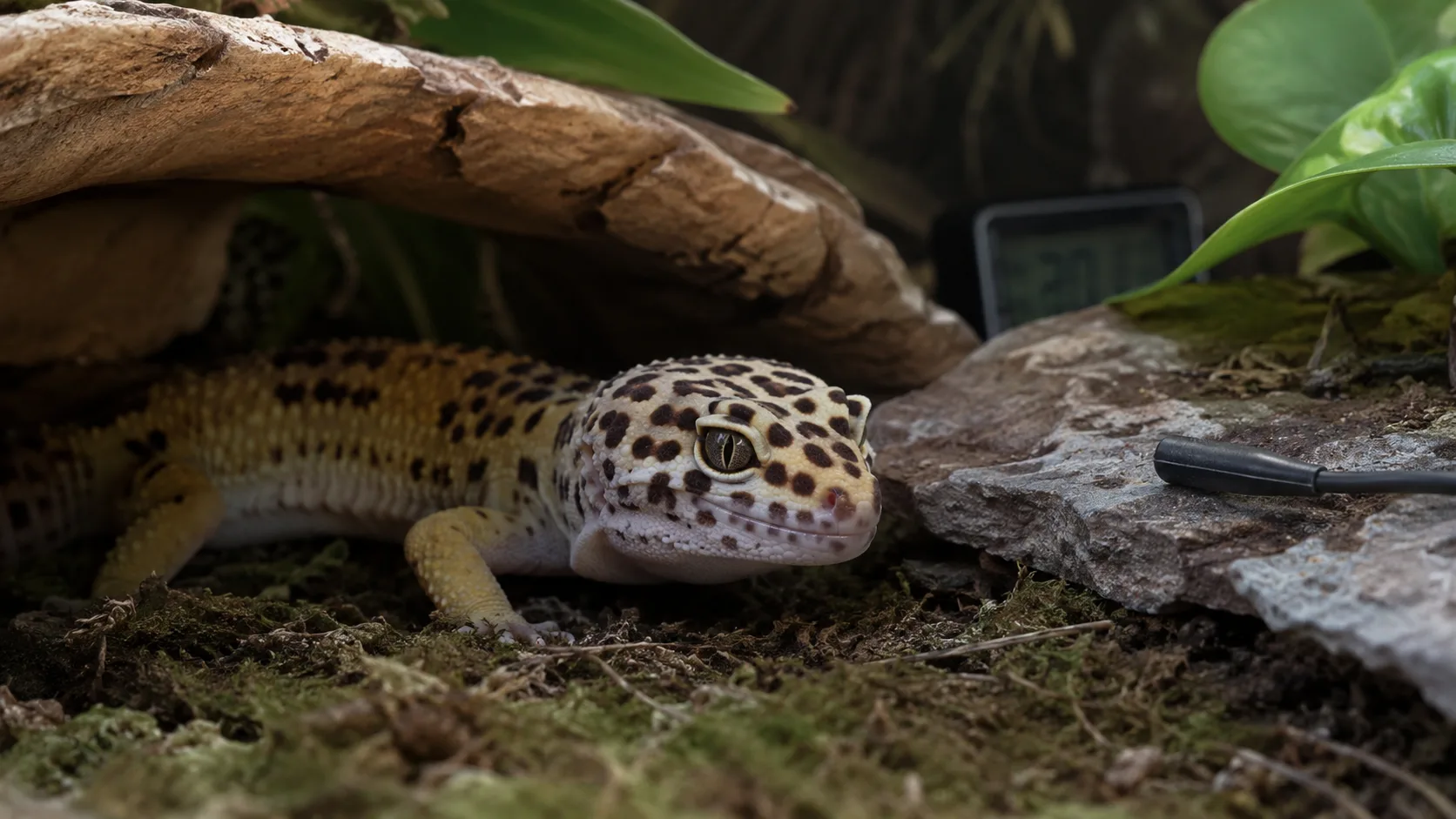
What temperature do leopard geckos need?
Short answer
Leopard geckos need a warm side of 28–30 °C (82–86 °F) and a cool side of 22–24 °C (72–75 °F), with a basking surface of 30–32 °C (86–90 °F). Night-time temperatures can drop to 18–21 °C (65–70 °F). Use an under-tank heater on a thermostat with a probe and a digital thermometer at each end.
- Author
- Reptimo Editorial
- Updated
- Updated
- Reading time
- 5 min read
What temperatures does a leopard gecko need?
Leopard geckos are crepuscular desert reptiles from Afghanistan, Pakistan and north-west India, and their bodies are built around two zones inside the enclosure: a warm side for digesting food and a cool retreat for sleeping and thermoregulating. The numbers below come from the Merck Veterinary Manual and consistent guidance across keeper-facing care sheets. Match all three temperatures — warm side air, basking surface, and cool side — and you've removed the single most common cause of feeding problems and weight loss in captive leopard geckos.
Care parameters
Leopard gecko temperature targets
| Parameter | Recommended value | Notes |
|---|---|---|
| Warm side (air) | 28–30 °C / 82–86 °F | Daytime, on the floor of the warm hide |
| Basking surface | 30–32 °C / 86–90 °F | Measured with an IR gun, directly under a halogen |
| Cool side | 22–24 °C / 72–75 °F | Retreat / cool hide, never below 18 °C |
| Night (whole tank) | 18–21 °C / 65–70 °F | No white light; ceramic emitter only if cool side drops below 18 °C |
How to measure temperature correctly
A stick-on dial thermometer on the side of the tank is the most common reason keepers think their setup is fine when it isn't. Air temperature at glass height tells you almost nothing about the belly heat the gecko actually feels. Use a digital probe thermometer with the sensor sitting on the substrate at the back of the warm hide, and a second probe at the cool end. An infrared temperature gun is the cleanest way to spot-check the basking surface and verify your probes — point it at the floor inside the warm hide and at the substrate under the basking bulb, not at the gecko itself.
For multi-pet households or anyone who wants a long-running record, log warm and cool side temperatures together with feeding entries so you can see if appetite tracks heating issues — a typical Reptimo workflow for new keepers.
What heat source should you use?
Two heat sources solve different problems and most setups want both:
- Under-tank heater (heat mat) on a thermostat — the workhorse for the warm hide. It supplies the belly heat that drives digestion and doesn't put out light, so it can run 24/7 if needed. Always on a thermostat with a probe fixed to the warm-side surface, otherwise it can climb to 50 °C+ and burn the gecko.
- Low-wattage halogen basking bulb (25–50 W) on a dimming thermostat — creates the slight surface peak of 30–32 °C (86–90 °F) above a basking spot and supplies daytime light. Optional on a strict budget; helpful for modelling a natural day-night cycle and supporting low-level UVB if used.
Avoid coloured "night-glo" bulbs (red, blue, purple) — peer-reviewed care guidance increasingly considers them disruptive to nocturnal behaviour and they aren't needed for heat when an under-tank heater on a thermostat is already in place.
Night temperatures and darkness
In the wild, leopard geckos shelter in humid burrows where overnight temperatures sit in the high-teens Celsius. In a heated home the cool side rarely drops below 21 °C (70 °F) on its own, so most setups need no special night heating. Keep belly heat under the warm hide via the thermostatted heat mat, switch off any white-light bulbs, and let the room go dark.
The exception is winter or unheated outbuildings: if the cool side falls below 18 °C (65 °F) for hours at a time, add a low-wattage ceramic heat emitter on its own thermostat. Ceramic emitters give heat without visible light, preserving the nocturnal cycle. If you're using one regularly, also log the room minimum each morning — a few weeks of data quickly shows whether the room itself is the underlying issue.
What goes wrong — and how to spot it
The two failure modes that show up in ReptiFiles' temperature guidance and on community boards are nearly always heating problems first, behaviour problems second:
- Warm side too cool (< 25 °C / 77 °F) — the gecko stops feeding, may regurgitate, and loses weight from the tail (the fat-store organ). Check the probe placement and thermostat setpoint before assuming illness.
- Warm hide too hot (> 33 °C / 92 °F) — the gecko avoids the warm side entirely and clings to the cool end or the glass. Surfaces above 35 °C (95 °F) cause belly burns; an unregulated heat mat is the usual culprit.
If you're seeing either pattern, fix temperatures first and re-check feeding behaviour after a week. Persistent loss of appetite with correct temperatures is when a vet visit is appropriate — see also our guide on why snakes refuse food, since the diagnostic logic for any reptile refusing food starts with the same two questions: temperatures and stress.
Frequently asked questions
Do leopard geckos need a heat lamp at night?
What temperature is too hot for a leopard gecko?
Can leopard geckos digest food at room temperature?
Where should I place the thermometer?
Do leopard geckos need a basking spot?
What thermostat should I use for a leopard gecko heat mat?
How long without heat is safe?
Do leopard geckos brumate when it gets cold?
Sources
- Leopard Gecko Care Sheet · PetMD
- Disorders and Diseases of Reptiles · Merck Veterinary Manual
- ReptiFiles — Leopard Gecko Heating Guide · ReptiFiles
Quick check
Test what you just learned
A short quiz, just for you. Pick an answer to get instant feedback — there's no pass mark, this is for your benefit.
Quiz questions and answers
What is the correct warm-side air temperature for a leopard gecko?
Correct answer: 28–30 °C (82–86 °F)
Leopard geckos digest food efficiently around 28–30 °C (82–86 °F) on the warm side. Below 25 °C digestion stalls; above 33 °C they retreat permanently to the cool side.
Where should you measure the warm-side temperature?
Correct answer: On the floor of the warm hide with a digital probe
Belly heat from below is what drives leopard gecko digestion, so the meaningful reading is the surface temperature inside the warm hide — taken with a digital probe or infrared gun.
What should you do about heating at night?
Correct answer: Keep belly heat available but skip white light; only add backup heat if the room drops below 18 °C (65 °F)
Leopard geckos are nocturnal — they need a dark room. A thermostatted under-tank heater can stay on if the room is cool, but no bright lamps. Only escalate to a ceramic heat emitter if the cool side drops below 18 °C.