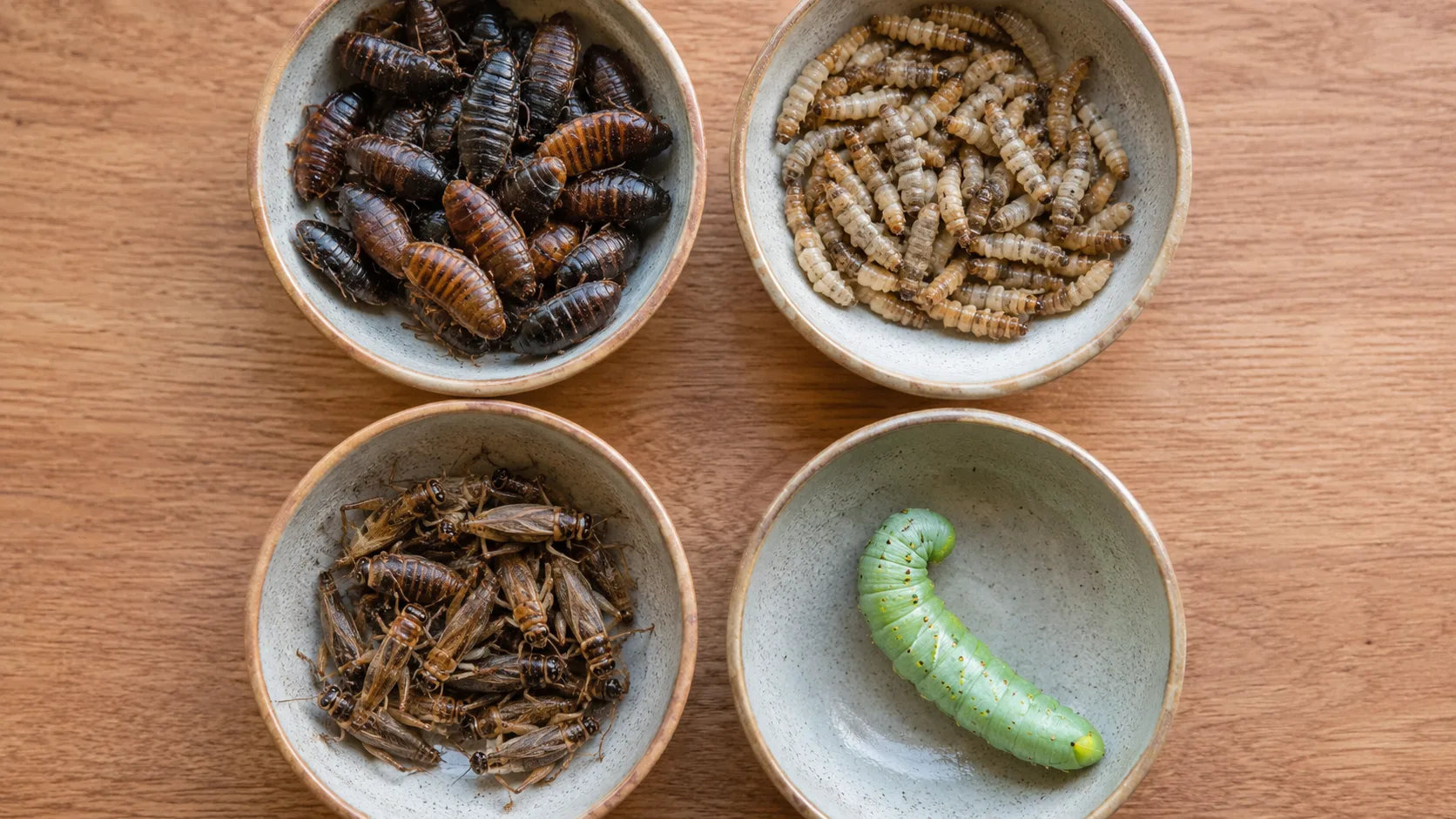
What do leopard geckos eat?
Short answer
Leopard geckos eat live insects — staples are dubia roaches and black soldier fly larvae (calciworms), with crickets, hornworms and silkworms as variety, and mealworms or wax worms as occasional treats only. All feeders gut-loaded for 24+ hours, dusted with calcium-with-D3 most feedings. Never offer wild-caught insects, fireflies, or anything wider than the space between the gecko's eyes.
- Author
- Reptimo Editorial
- Updated
- Updated
- Reading time
- 5 min read
The feeder hierarchy
Leopard geckos (Eublepharis macularius) are obligate insectivores — they eat live invertebrates and nothing else. The modern feeder list, ranked by nutritional value and operational sanity, comes from ReptiFiles' leopard gecko diet guide and consistent recommendations across PetMD's care sheet.
Care parameters
Leopard gecko feeder insects — ranked
| Parameter | Recommended value | Notes |
|---|---|---|
| Dubia roaches | STAPLE | High protein, low fat, easy calcium, gut-load well, can't climb glass |
| BSFL (calciworms) | STAPLE | Naturally high calcium, soft body, accepted by most geckos |
| Crickets | Acceptable staple, annoying | Loud, smelly, escape, can bite sleeping geckos |
| Hornworms | VARIETY | Water-rich, carotenoid-loaded, good for borderline-dehydrated geckos |
| Silkworms | VARIETY | Soft, calcium-rich, expensive, short-lived once shipped |
| Mealworms | TREAT / GRAZING DISH | Hard chitin, high fat — not a staple |
| Superworms | TREAT | Similar issues to mealworms; can bite |
| Wax worms | DESSERT (1×/week max) | High fat/sugar; geckos refuse better food after |
| Pinky mice | NOT recommended | Reserved for breeding females or recovery under vet |
| Wild-caught insects | NEVER | Pesticides, parasites, fireflies can be lethal |
Staple feeders
Dubia roaches (Blaptica dubia) are the modern gold-standard feeder. High protein (~22 % vs mealworms' ~14 %), low fat, gut-load well, easy calcium absorption (calcium:phosphorus ratio ~1:3, improved by dusting), can't climb glass, don't fly, don't smell. A 100-count colony costs roughly the same as 8 weeks of crickets and self-sustains if breeding.
Some regions (Florida, parts of Canada, Hawaii) have legal restrictions on dubias. Check local laws.
Black soldier fly larvae (BSFL / "calciworms") are the strongest all-around alternative. Naturally calcium-rich (1.5:1 Ca:P ratio without dusting — the only feeder with this property), soft body, ship live easily. Slightly more expensive per insect than dubias.
Either as primary staple works; rotating between the two adds nutritional and behavioural variety.
Acceptable but annoying: crickets
Crickets are nutritionally fine but operationally a hassle. They are loud (chirping at night), they stink, they escape every time the tub opens, and at night a loose cricket will harass and even bite a sleeping gecko, causing stress and sometimes small wounds.
If you use crickets:
- Remove any uneaten ones from the enclosure within 15 minutes.
- Keep the cricket tub in a cool location away from the gecko (most rooms work).
- Pre-empt escapes with a tight lid.
Most experienced keepers move away from crickets after one or two escape incidents.
Variety: hornworms and silkworms
Hornworms (Manduca sexta larvae) are large, soft, water-rich (~85 % water), gut-loaded with carotenoids that enhance gecko coloration. Excellent for:
- Slightly underweight geckos needing easy calories.
- Borderline-dehydrated geckos (the water content helps).
- Variety-starved adults.
Don't use as a staple — too water-heavy and soft to be balanced nutrition long-term.
Silkworms (Bombyx mori larvae) are soft, calcium-rich, easy to digest. Expensive (often £0.30–0.50 per silkworm) and short- lived once shipped (3–10 days). Excellent occasional treats and high-quality variety for picky eaters.
Treats only
Mealworms (Tenebrio molitor larvae) have a popular reputation as "the easy gecko food" because they don't escape easily and live in a bowl. The trade-off:
- Hard chitin shell — harder to digest than dubias or BSFL.
- High fat (~13 %) — drives obesity in adult geckos.
- Lower usable calcium than dubias or BSFL.
- Lower protein than dubias.
A small dish of dry mealworms for grazing is harmless and many geckos enjoy it. A mealworm-only diet causes obesity, fatty liver, and contributes to MBD over time.
Superworms (Zophobas morio larvae) — similar issues to mealworms, plus they can bite a gecko's mouth or throat (crush the head first if feeding live).
Wax worms are dessert. High fat, high sugar, low nutritional value. Geckos love them and refuse better food for days afterwards. Maximum 1–2 worms once a week.
Never feed
- Wild-caught insects of any kind — pesticide residue, parasite carriers, predator chemicals.
- Fireflies / lightning bugs — lethal. Toxic to reptiles.
- Pinky mice — too fatty, unnecessary. Reserved for breeding females or recovering underweight animals under vet supervision.
Sizing the insects
The rule across every reputable care sheet: a feeder insect should be no wider than the space between the gecko's eyes. Wider prey risks impaction (an undigested mass blocking the gut) or choking. Smaller is always safer — multiple small insects beats one oversized one.
For a typical adult leopard gecko:
- Dubia roaches: medium (~1.5 cm body length).
- Crickets: small to medium adult.
- Hornworms: ½-inch (12 mm) — they grow fast, so feed before they outgrow.
- BSFL: any size up to the eye-width rule.
For hatchlings: use much smaller prey (¼-inch / 6 mm or smaller).
Gut-loading
The gecko gets whatever sits in the insect's gut. Feed feeders for 24–72 hours before offering them:
- Fresh leafy greens (collard, dandelion, mustard greens).
- Diced vegetables (squash, carrot, sweet potato).
- Commercial dry gut-load (Repashy Bug Burger, Zoo Med Cricket Crack, Mazuri Better Bug Diet).
- Water source — gel cubes (water crystals) or a small damp sponge. Never open water; insects drown.
Insects starved in a tub for three days are nutritionally hollow no matter what supplement you dust them with. The full feeding guide covers the calcium / D3 / multivitamin schedule across life stages, and the pillar care guide has the broader husbandry context.
Frequently asked questions
What's the best staple feeder for a leopard gecko?
Are mealworms OK for leopard geckos?
Are crickets good feeders for leopard geckos?
How big should the insects be?
How often should I dust the insects with calcium?
What are hornworms good for?
Should leopard geckos eat wax worms?
What should I gut-load feeders with?
Can leopard geckos eat baby food, fruit or vegetables?
Sources
- Leopard Gecko Care Sheet · PetMD
- Leopard Gecko Feeding & Diet · ReptiFiles
- Disorders and Diseases of Reptiles · Merck Veterinary Manual
Quick check
Test what you just learned
A short quiz, just for you. Pick an answer to get instant feedback — there's no pass mark, this is for your benefit.
Quiz questions and answers
Which is the best STAPLE feeder for a leopard gecko?
Correct answer: Dubia roaches or BSFL — both protein-rich, calcium-absorbable, low fat
Dubia roaches and black soldier fly larvae (BSFL/calciworms) are the modern gold standard. Wax worms are dessert. Mealworm-only diets cause obesity and contribute to MBD.
What's the safe insect size for a leopard gecko?
Correct answer: No wider than the space between the gecko's eyes
The standard rule across reptile keeping: no wider than the space between the gecko's eyes. Wider risks impaction and choking. Smaller is always safer; a row of small insects beats one oversized one.
What's gut-loading and why does it matter?
Correct answer: Feeding insects nutrient-dense food for 24+ hours so the gecko gets that nutrition when it eats them
The gecko gets whatever sits in the insect's gut. Feed insects fresh greens, squash, carrot and a commercial gut-load for 24–72 hours before offering. Insects starved in a tub for 3 days are nutritionally hollow.
Wax worms should be…?
Correct answer: An occasional treat, maximum 1–2 worms once a week
Wax worms are high-fat dessert. Geckos love them and refuse better food afterwards. Max 1–2 once a week as a treat — not a regular feature of the rotation.