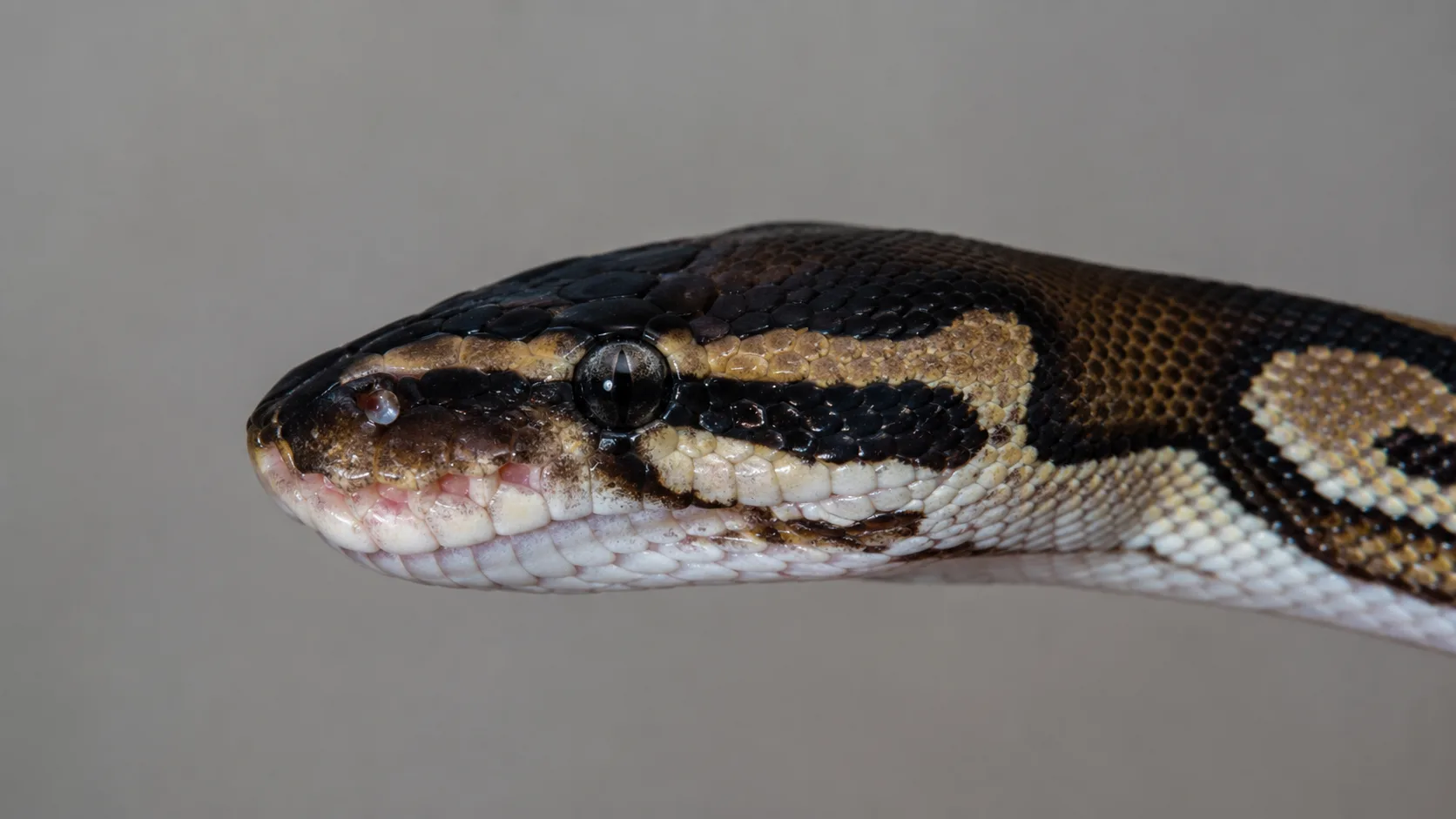
What are the signs of a respiratory infection in a ball python?
Short answer
Open-mouth breathing, audible wheezing or whistling on each breath, mucus or bubbles around the nostrils, raised head with neck extended, lethargy and refused food are early signs of a ball python respiratory infection. RI is a veterinary emergency — book a reptile-experienced vet within days, not weeks. Most cases trace to chronic cold or excess humidity, not luck.
- Author
- Reptimo Editorial
- Updated
- Updated
- Reading time
- 5 min read
YMYL note: this is veterinary territory
Respiratory infection (RI) in reptiles is a serious veterinary condition with real mortality risk. This article describes recognition and husbandry-side prevention so a keeper can act early — it is not a substitute for a reptile-experienced vet, and nothing here should be read as treatment advice. If your snake shows any of the signs below, book a vet within 1–3 days. Bring a written husbandry log (temperatures, humidity, last shed, recent feeding, age).
What RI looks like — the signs
Per the Merck Veterinary Manual, captive ball pythons present with a consistent pattern:
- Open-mouth breathing — the snake holds its mouth open at rest, not just during a yawn or after a defensive strike.
- Audible breath sounds — wheezing, whistling, clicking, or a raspy quality on each breath. Healthy ball pythons breathe silently.
- Mucus or bubbles at the nostrils or in the mouth — bubbles can appear after a long drink and resolve in minutes; persistent mucus is the warning sign.
- Head raised, neck extended — the snake tilts its head up to open the airway. Sometimes called "stargazing position" in early RI, though true stargazing (neurological) is different and worse.
- Lethargy and refused food — snake won't strike at offered prey and remains in one place for days.
- Skin colour or shedding changes — secondary signs of chronic poor husbandry that often coexist with RI.
A single brief bubble after drinking is not RI. Any combination of two or more of the above, especially audible breathing + refusal to eat, is RI until proven otherwise.
What causes respiratory infection
Most ball python RI cases trace to one (or both) of two husbandry problems, with a smaller minority caused by infectious disease:
1. Chronic under-heating. A warm-side surface that sits below 27 °C (80 °F) for sustained periods suppresses immune function and lets opportunistic bacteria flourish. This is the single most common root cause. Verify with an infrared gun on the actual basking surface, not a stick-on dial — see the temperature guide.
2. Sustained excess humidity + poor ventilation. Humidity above 70 % in a sealed enclosure with no airflow creates ideal conditions for bacterial respiratory growth. Cross-ventilation matters as much as the humidity reading itself — a tub at 80 % with no ventilation is much worse than an open enclosure at 70 %. See humidity setup for the correct band.
3. Viral or parasitic disease — paramyxovirus, nidovirus, snake mites carrying secondary infection. Less common but worth ruling out with a vet, especially in collections with recently introduced animals or any quarantine breach. Quarantine new snakes 30+ days.
4. Chronic stress — overhandling, no secure hides, exposure to loud noise or constant disturbance — weakens immune function the same way it does in mammals.
What to do RIGHT NOW
If you suspect RI in your ball python, the same-day steps:
- Verify temperatures with an IR temperature gun. Warm-side surface should read 30–32 °C (86–90 °F). If it's below, raise the thermostat setpoint or check the heat source.
- Verify humidity — drop to 55–60 % if it's been chronically higher, and open ventilation in tubs/PVC enclosures.
- Don't handle the snake. Handling stresses an already-stressed respiratory system.
- Don't offer food. A snake fighting RI shouldn't be digesting.
- Book a reptile-experienced vet within 1–3 days. General- practice vets often don't have experience with reptile dosing or the right antibiotics. Find an exotics specialist if possible.
- Bring a written husbandry log — current temperatures (warm side, ambient, cool side, night), humidity, last shed date, last feeding, age, time in current setup, recent changes.
When to see a vet — non-negotiable
Respiratory infection is a YMYL (health-or-life) situation. There is no DIY treatment that beats a vet appointment, and several common keeper interventions actively make things worse:
- Don't raise humidity to 90 % "to clear the lungs" — high humidity worsens bacterial RI.
- Don't use over-the-counter antibiotics meant for fish. Wrong dose, wrong spectrum, wrong route, risk of resistance.
- Don't wait a month to see if it clears. RI hides progression.
A reptile vet will typically: examine the snake, listen to respiratory sounds, optionally take a tracheal wash for culture and sensitivity testing, prescribe targeted injectable antibiotics (commonly ceftazidime or enrofloxacin, depending on culture), sometimes recommend nebulisation. Treatment runs 7–14+ days; complete the full course even if the snake looks better in days.
For the broader cross-species illness pattern, see "is my reptile sick?".
How to prevent recurrence
Once the snake is recovered, the husbandry audit:
Care parameters
Ball python RI prevention — the targets
| Parameter | Recommended value | Notes |
|---|---|---|
| Warm-side surface | 30–32 °C / 86–90 °F | Verified with IR gun on substrate |
| Ambient air | 26–28 °C / 78–82 °F | |
| Cool side | 24–26 °C / 75–78 °F | |
| Night-time warm side | ≥ 22 °C / 72 °F | Mild background heat, no bright light |
| Humidity | 55–60 % daily | Brief 65–70 % during shed |
| Ventilation | Cross-flow always | Add holes in tubs; don't seal |
| Quarantine | 30+ days for new snakes | Separate room, separate tools |
Pair the audit with monthly deep cleans (full décor/substrate change), weekly weight tracking and a yearly reptile-vet wellness check. Most RI recurrences in well-kept ball pythons trace to a slow temperature drift over winter — log temperatures monthly and you'll catch it before the next infection.
For other refusal-to-eat causes that look like RI but aren't, see the not-eating diagnostic guide.
Frequently asked questions
What does a ball python with a respiratory infection look like?
Is a respiratory infection serious in a ball python?
What causes respiratory infections in ball pythons?
Can a ball python recover from a respiratory infection on its own?
How long does a respiratory infection take to clear?
How do I prevent a respiratory infection?
Is mucus around the mouth always a respiratory infection?
Can humidity that's too HIGH cause a respiratory infection?
What should I do RIGHT NOW if I think my ball python has an RI?
Sources
- Disorders and Diseases of Reptiles · Merck Veterinary Manual
- Ball Python Care Sheet · PetMD
- Respiratory Disease in Reptiles · Merck Veterinary Manual
Quick check
Test what you just learned
A short quiz, just for you. Pick an answer to get instant feedback — there's no pass mark, this is for your benefit.
Quiz questions and answers
Which of these is a CLASSIC sign of respiratory infection in a ball python?
Correct answer: Audible wheezing on each breath plus mucus at the nostrils
Audible breath sounds (wheezing, whistling) and visible mucus or bubbles at the nostrils are textbook RI signs. Coiling in a hide is normal behaviour; one skipped meal in autumn is often seasonal slowdown.
Your ball python has mild wheezing and a bubble at one nostril. What's the right next step?
Correct answer: Verify temperatures, drop humidity to 55–60 %, stop handling, and book a reptile vet within 1–3 days
Correct husbandry, stop handling, and a vet appointment within days. High humidity at 90 % makes RI worse, not better. Waiting a month risks progression to pneumonia.
What's the most common root cause of RI in captive ball pythons?
Correct answer: Sustained low temperatures and/or unventilated high humidity
Per the Merck Veterinary Manual, most captive RI cases trace to husbandry — chronically cold warm-side temperatures (< 27 °C) or sealed enclosures with humidity > 70 % and no ventilation. Fixing the root cause is part of treatment, not separate from it.
Can a ball python's respiratory infection clear on its own?
Correct answer: Sometimes mild cases resolve with husbandry corrections, but RI hides advanced disease, so a vet visit is still the right call
Mild cases sometimes look like they clear with husbandry fixes, but snakes hide symptoms until disease is well advanced, and bacterial RI can become pneumonia. A reptile vet should evaluate even mild presentations — better than guessing wrong with a 20-year-lifespan animal.