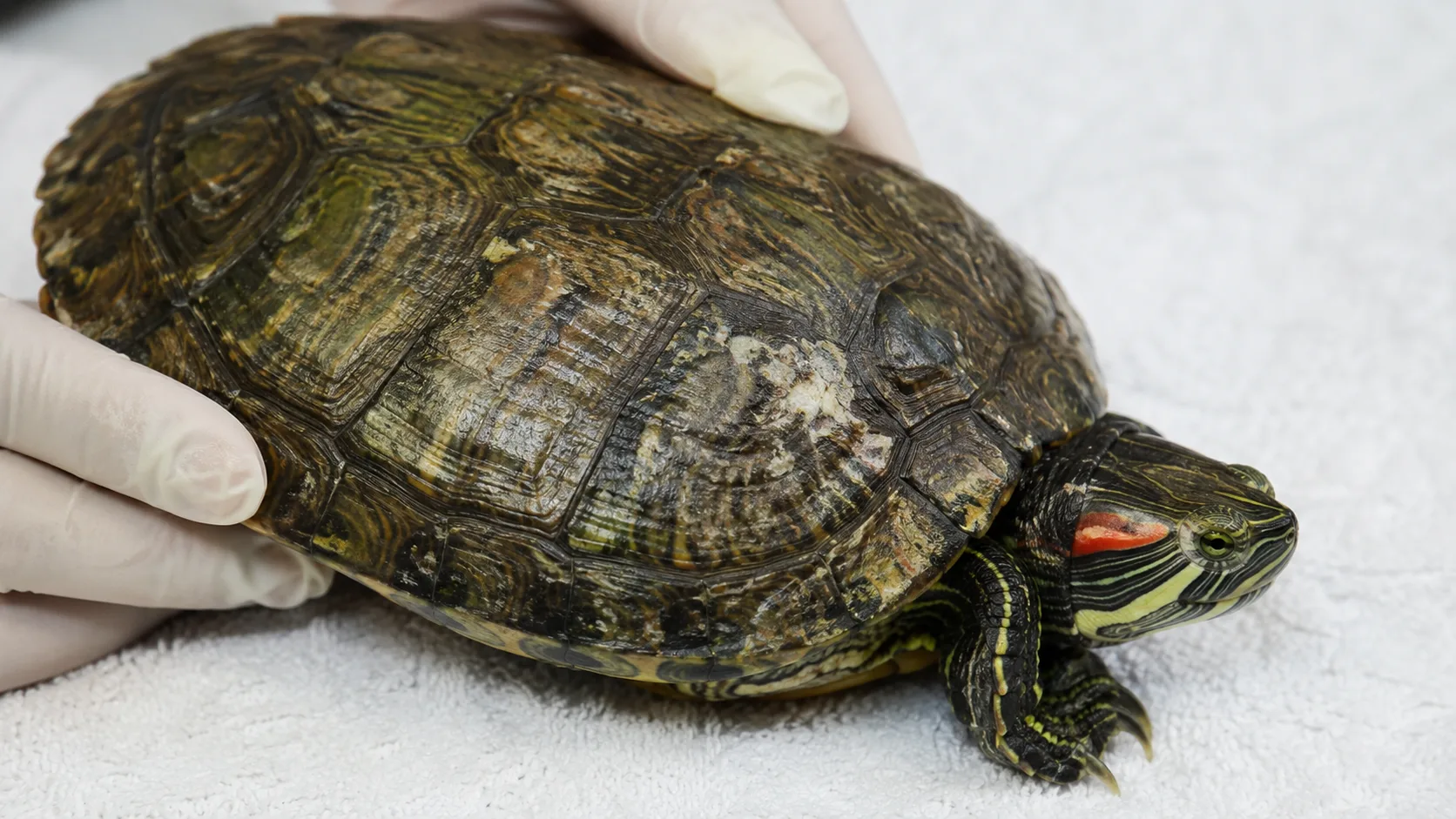
What causes shell rot in red-eared sliders, and how do I treat it?
Short answer
Shell rot in red-eared sliders is a bacterial or fungal infection of the shell driven by dirty water, no proper basking dry-off, or untreated injuries. Early stages — white spots, soft patches, mild pitting — can be treated at home with daily dry-docking, dilute chlorhexidine or povidone-iodine cleaning and a topical antibiotic. Anything pitted, foul- smelling or bleeding needs a reptile vet within 48 hours.
- Author
- Reptimo Editorial
- Updated
- Updated
- Reading time
- 5 min read
What shell rot is
Shell rot — clinically, ulcerative shell disease — is a bacterial or fungal infection that erodes the keratin layer of an aquatic turtle's shell and, left untreated, the bone underneath. Two forms are described in the veterinary literature, summarised by the Merck Veterinary Manual and care-focused Reptiles Magazine reviews:
- Wet rot — the more common form. Soft, discoloured patches; sometimes cheesy discharge; foul smell. Often spreads underneath apparently intact scutes.
- Dry rot — chunks of shell crumble away in pieces, leaving deep divots.
Both forms start the same way: a small white spot, a soft patch under fingertip pressure, or a scrape that didn't heal cleanly. That's the window where home treatment works and a vet visit isn't required yet.
Care parameters
Red-eared slider — at-a-glance shell-rot context
| Parameter | Recommended value | Notes |
|---|---|---|
| Water temperature | 24–28 °C / 75–82 °F | Adult; warmer for juveniles |
| Basking surface | 32–35 °C / 90–95 °F | |
| UVB at basking | UVI 3–4 | T5 HO across the basking platform |
| Water changes | 25 % weekly + full as filter dictates | Filter sized for 2× tank volume/hour minimum |
| Dry-dock duration (treatment) | 12–24 h/day | With brief swim/feed breaks |
What causes shell rot
Per the TurtleHolic shell rot guide, three factors drive nearly every case:
- Dirty water. Low or undersized filtration, infrequent partial water changes, or both. Bacterial load builds, scrapes that would otherwise heal get infected.
- No proper basking platform. Wild sliders dry their shells fully under sun every day; that drying cycle is what stops bacteria and algae establishing. A platform that's too small or doesn't get hot enough leaves the shell perpetually damp.
- Untreated shell injury. Tank-mate fights, falls, sharp décor and even pre-existing scute peeling that wasn't watched can all open a path for infection.
Incorrect water temperature compounds all three. Cold water depresses the turtle's immune response, so any of the above is more likely to become rot than the same scenario at proper temperatures.
How to recognise the stages
Catching shell rot early is what determines whether home treatment is enough or a vet visit is required. The progression:
- Stage 1 — early surface infection. Small white, grey or pale spots, often on the plastron (underside) first. Shell still feels firm; no smell.
- Stage 2 — established surface rot. Larger patches, slight pitting, the affected area feels softer than surrounding shell. A faint smell may appear when the turtle is lifted out of water.
- Stage 3 — deep rot. Visible divots, chunks of shell flaking or crumbling, foul smell, occasional discharge, possibly bleeding. The underlying bone may be visible in the worst patches.
- Stage 4 — systemic infection. Lethargy, refusal to eat, swollen limbs, foul mucus from the mouth or eyes. Septicemia — a life-threatening blood infection.
How to treat mild shell rot at home
Stage 1 and the milder end of stage 2 — small surface patches, no pitting, no smell, no bleeding — can usually be treated at home. The protocol matches the PetMD shell-infection guide:
- Dry-dock. Set up a separate enclosure (a clean plastic tub) under the same basking lamp and UVB tube. Keep the turtle out of water 12–24 hours a day, allowing brief swims (15–30 min) twice daily for drinking and feeding. Hatchlings get shorter dry-dock blocks — they dehydrate faster.
- Clean the affected area twice daily. Gently swab with a dilute solution of chlorhexidine (1:40) or povidone-iodine (1:10) on a soft gauze. Let it sit on the shell for a minute, then pat dry.
- Apply a thin layer of plain triple-antibiotic ointment (bacitracin / neomycin / polymyxin B — no lidocaine, no painkillers). Reapply at each cleaning.
- Return to clean water once daily for drinking and a feed, then pat dry and return to dry-dock.
Continue daily for at least 7–14 days. Improvement should be visible — patches paling, smell gone, edges firming. If there is no improvement after 14 days, or anything worsens, escalate to a reptile vet.
When to see a vet
These signs move it out of home-treatment range immediately:
- Pitting, divots or crumbling shell.
- Any bleeding from the shell.
- Foul-smelling discharge.
- Lethargy, loss of appetite, swollen limbs (signs of systemic infection).
- No improvement after 14 days of correct dry-dock and topical care.
- Hatchlings or very small turtles with any shell rot — they decompensate fast.
A reptile vet may debride dead tissue under sedation, take swabs to identify the specific bacteria or fungus, prescribe systemic antibiotics, and follow up over weeks. Bring a husbandry log — water temperature, filtration schedule, basking temperatures, recent shell photos. Veterinary oversight of a stage 3 or 4 case dramatically improves the prognosis.
Prevention
Shell rot is almost entirely a husbandry problem, and the prevention stack is short:
- Filtration sized correctly. A canister filter rated for at least twice the tank's water volume per hour, with weekly 25 % water changes and a full clean of the filter media on the manufacturer's schedule.
- Real basking platform. Above the water line, dry, big enough for the whole turtle. Basking lamp reaching 32–35 °C (90–95 °F) on the shell surface, with a UVB tube across the platform.
- Quarantine new turtles for 30+ days. Many shell-rot cases start with a new tank-mate carrying a pre-existing infection.
- Weekly shell check. Lift the turtle out of the water, check the plastron and carapace under good light, run a fingernail very gently over any spot that looks off. Catch problems at stage 1.
A weekly husbandry routine that includes a shell check turns shell rot from a serious crisis into a 60-second observation. For the broader warning-sign vocabulary across reptiles, see our guide to the signs your reptile is sick — shell rot fits the same "catch it early, escalate on specifics" pattern that applies across the hobby.
Frequently asked questions
What does shell rot look like in a red-eared slider?
What causes shell rot in red-eared sliders?
Can I treat shell rot at home?
How long does shell rot take to heal?
What is dry-docking and why is it used for shell rot?
Will shell rot kill my red-eared slider?
Can a red-eared slider's shell heal back to normal?
How do I prevent shell rot coming back?
What water temperature do red-eared sliders need to avoid shell rot?
Sources
- Red Eared Slider Shell Rot: Causes, Symptoms, Treatment · TurtleHolic
- Identify and Treat Mouth, Shell and Scale Rot in Reptiles · Reptiles Magazine
- Skin and Shell Infection in Reptiles · PetMD
- Common Diseases of Aquatic Turtles · Reptiles Magazine
- Disorders and Diseases of Reptiles · Merck Veterinary Manual
Quick check
Test what you just learned
A short quiz, just for you. Pick an answer to get instant feedback — there's no pass mark, this is for your benefit.
Quiz questions and answers
Which of these earns an immediate vet visit, not home treatment?
Correct answer: Shell pitting, foul smell, or any bleeding from the affected area
Pitting, smell or bleeding all indicate the infection has progressed beyond surface keratin into deeper tissue and possibly bone. That's a YMYL situation — home treatment is no longer appropriate; a reptile vet needs to debride and prescribe systemic antibiotics.
What's the central principle behind dry-docking?
Correct answer: Denying bacteria the constant moisture they need, while basking heat and UVB speed shell healing
Dry-docking removes the wet environment shell-rot bacteria need to thrive and concentrates basking heat plus UVB on the affected area to support the immune response. It's a husbandry intervention, not punishment, and it's central to every early-stage treatment protocol.
What single habit prevents most shell rot from recurring?
Correct answer: A filter sized for the tank, weekly water changes, and a properly heated dry basking spot
Clean water, regular partial changes, and a real dry basking spot remove the conditions shell rot needs to start. Filter + water changes + basking heat + UVB is the prevention stack — nothing in the tank itself, no salt, no additives.