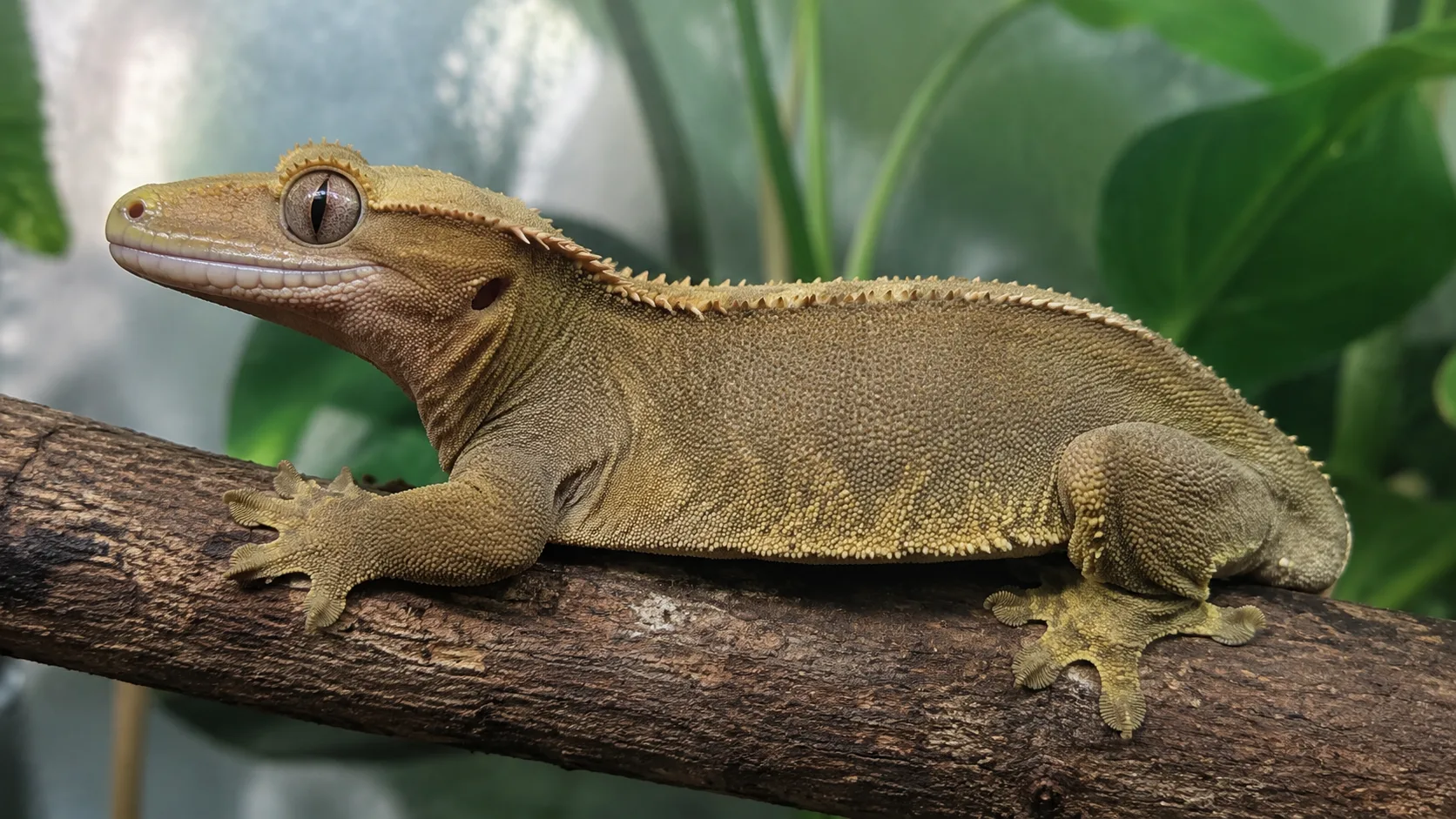
My crested gecko dropped its tail — what do I do?
Short answer
Don't panic. A dropped tail in a crested gecko is dramatic but not a medical emergency. Clean the small wound at the tail base gently with saline, keep the enclosure clean for 1–2 weeks while it heals, and identify the stress trigger so it doesn't recur. Crested gecko tails do NOT regenerate — your gecko will be a healthy "frog-butt" for the rest of its life.
- Author
- Reptimo Editorial
- Updated
- Updated
- Reading time
- 5 min read
The tail will NOT grow back
The hardest part of crested gecko (Correlophus ciliatus) tail drop isn't the wound — it's accepting that the tail is gone permanently. Per PetMD's care sheet and consistent guidance from ReptiFiles' crested gecko guide:
- Crested geckos do not regenerate dropped tails. Unlike leopard geckos (which regrow a stubby replacement) and many other gecko species, the crested gecko's tail does not grow back at all.
- The wound at the autotomy site heals over into a smooth rounded stump within weeks. This is the famous "frog-butt" look.
- A tailless crested gecko is just as healthy as a tailed one. Balance is slightly affected for a few days while the gecko adapts, then no functional difference. Many adult crested geckos in the captive trade are tailless and otherwise normal.
What to do RIGHT NOW
Uncomplicated tail drop in a healthy adult — first steps:
- Move the gecko to a low-stress quarantine. Smaller enclosure with paper-towel substrate (for easier wound cleanup), basic hides, water dish, no climbing branches that could re-injure.
- Stop handling completely for at least one week. The gecko has just experienced a significant stress event; further handling makes recovery harder.
- Gently flush the wound at the tail base with saline solution (sterile contact lens saline works) once daily for 2–3 days. Use a clean cotton swab or syringe; don't scrub.
- Monitor for infection — redness, swelling, discharge, or sustained dark colour around the wound site. Infection signs = reptile-vet appointment within days.
- Remove the detached tail from the enclosure. It will keep wiggling for a few minutes (a defence distraction mechanism) then go still. Some keepers freeze it briefly out of respect before disposal; others bin it directly.
- Identify the stress trigger — was it rough handling? Cage- mate conflict? A fall? A pet getting close to the enclosure? Identifying the cause prevents recurrence.
What causes tail drop
Tail drop (caudal autotomy) is a defence response. The crested gecko's tail is designed to break cleanly at predictable autotomy planes when grabbed or stressed beyond a threshold. Common triggers, per Zen Habitats' Q&A:
- Grabbing the tail during handling — single most common cause. Never grab a crested gecko by the tail.
- Falling from a height — a crested gecko jumping from a high branch onto a hard surface, or being dropped during handling.
- Sudden loud noise very close to the enclosure (slammed door, loud music nearby).
- Cage-mate conflict if co-housed — fights and dominance challenges trigger drops.
- Predator perception — a cat, dog, or large bird visible through the glass and reacting to the gecko.
- General stress in a new home, especially in the first 1–2 weeks before the gecko settles.
- Constriction during a struggle — being pinned down or held too tightly.
A relaxed crested gecko does not drop its tail randomly. Tail drop is communicating either acute fear or accumulated chronic stress.
Healing timeline
Care parameters
Crested gecko dropped tail — healing milestones
| Parameter | Recommended value | Notes |
|---|---|---|
| Hour 0: wound opens | Clean break at autotomy plane | Minimal blood; some weeping is normal |
| Day 1–2 | Wound seals | Body closes the wound naturally |
| Day 5–7 | Fully scabbed | Pink/brown scab forms over the stump |
| Week 2–4 | Scab falls away, new skin underneath | Pink-ish at first |
| Week 4–8 | Final smooth rounded stump | Skin remodels; coloration matures |
| Lifetime | No further changes | No regrowth; gecko adapts in a few days |
During healing, keep the quarantine enclosure clean. Paper-towel substrate replaced every 2–3 days minimises infection risk; spot- clean any waste immediately. Don't apply ointments, antiseptics (beyond saline rinse), or "skin repair" creams meant for mammals — the wound heals best with clean dry-ish conditions and minimal intervention.
When to see a vet
Most uncomplicated tail drops in healthy adult crested geckos heal without veterinary intervention. See a reptile vet if any of:
- The wound is at an unusual location (mid-tail instead of at the autotomy plane near the base, or a body wound beyond just the tail).
- The gecko was injured beyond the tail drop — limp limb, bleeding from anywhere else, visible bone, deep crushing.
- Wound signs of infection — redness extending into healthy tissue, swelling beyond the wound itself, discharge, persistent foul smell.
- The gecko is very small (under 10 g) — wound proportionally larger and recovery harder.
- The gecko is already stressed or unwell — combined stressors raise risk.
- You're unsure — a quick wellness check at a reptile vet is cheaper than waiting for a complication.
Preventing future drops
Once the immediate situation is handled, the prevention work:
- Never grab the tail during handling. Always support the gecko's body.
- Use the hand-walking technique — let the gecko walk hand over hand. Never restrain or trap.
- Build a quiet zone around the enclosure during the first 2 weeks in a new home. Minimal foot traffic, no loud music, no other pets visible through the glass.
- House individually. Co-housing crested geckos is risky even in apparently calm pairs — dominance bullying or sudden fights can trigger drops.
- Climb-safe enclosure layout — branches at multiple heights reduce hard falls.
- Don't handle right after a stress event (new home, vet visit, another stressful incident). Give 1–2 weeks of settle time.
The pillar care context is in the pillar care guide. For weight-tracking and body-condition issues that parallel tail loss in leopard geckos (which have a different tail biology — they regrow), see the leopard gecko skinny tail guide; cross-species early warning patterns sit in "is my reptile sick?".
Frequently asked questions
Will my crested gecko's tail grow back?
Is a tailless crested gecko unhealthy?
What causes a crested gecko to drop its tail?
What should I do immediately after my crested gecko drops its tail?
Do I need to take the gecko to a vet for a dropped tail?
How long does the wound take to heal?
Can I prevent tail drops in the first place?
What's the difference between a dropped tail and a damaged tail?
How do you handle a recently-dropped tail at the gecko's location?
Sources
- Crested Gecko Care Sheet · PetMD
- Crested Gecko Care Guide · ReptiFiles
- Most Asked Crested Gecko Questions · Zen Habitats
- Disorders and Diseases of Reptiles · Merck Veterinary Manual
Quick check
Test what you just learned
A short quiz, just for you. Pick an answer to get instant feedback — there's no pass mark, this is for your benefit.
Quiz questions and answers
Will a crested gecko's dropped tail grow back?
Correct answer: No — crested geckos do NOT regenerate tails
Unlike leopard geckos and many other species, crested geckos do NOT regenerate dropped tails. The gecko heals into a tailless 'frog-butt' and lives a normal healthy life. Many adult cresteds in captivity are tailless.
Your crested gecko just dropped its tail. What's the right first step?
Correct answer: Place gecko in quarantine on paper towel, gently clean the wound with saline, don't handle for a week
Uncomplicated tail drop: quarantine on paper towel for easier cleaning, gently flush the wound base with saline once daily for 2–3 days, no handling for a week. Vet only needed if the wound is at an unusual location, looks infected, or the gecko was injured beyond the tail drop.
What's the most common trigger for a crested gecko tail drop?
Correct answer: Significant stress — rough handling, falls, cage-mate conflict, predator perception
Tail drop is a defence response to perceived threat or significant stress. Common triggers: grabbing the tail during handling, falls, sudden loud noise, cage-mate conflict, dogs or cats too close to the enclosure, or general stress in a new home.
How long does the wound take to fully heal?
Correct answer: Scabs in a week, fully remodels in 4–8 weeks
The wound seals in 1–2 days, is fully scabbed in 5–7 days, and the skin remodels into the final rounded stump over 4–8 weeks. The gecko's behaviour usually returns to normal within a few days.